NGSS and AP standards
High school chemistry skills are aligned to NGSS standards and the AP course to the College Board framework, so tutoring matches what your child is graded on.

High school & AP
Pioneered by Stanford AI researchers and learning scientists, Aristotle is the world's first voice-based AI chemistry tutor. From high school chemistry through AP and organic, Aristotle has improved thousands of grades over 22% within a week.
Trusted by families at












Fits your child's chemistry class
High school chemistry skills are aligned to NGSS standards and the AP course to the College Board framework, so tutoring matches what your child is graded on.
Share the syllabus or textbook and sessions follow your child's actual class, whether that's public, private, or homeschool.
Working toward the AP exam, a placement test, or getting a grade up? Aristotle builds the path backwards from your goal.
Features
Talk things through, work side by side, and come back next time to a tutor who remembers where you left off.
Ask questions out loud, hear explanations in Aristotle’s voice, and interrupt whenever you need to.
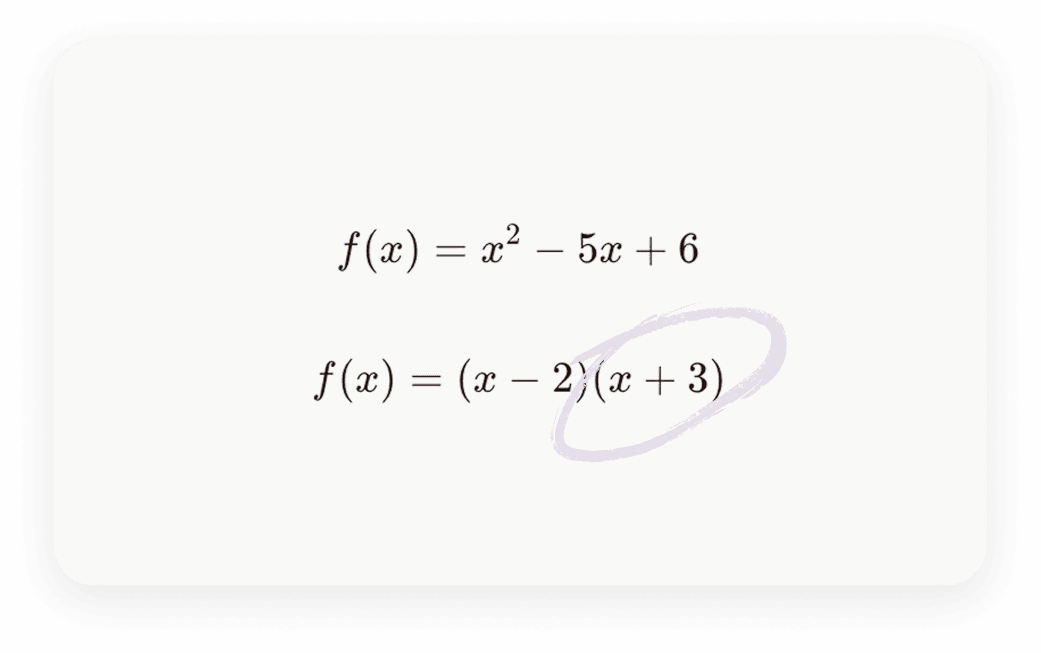
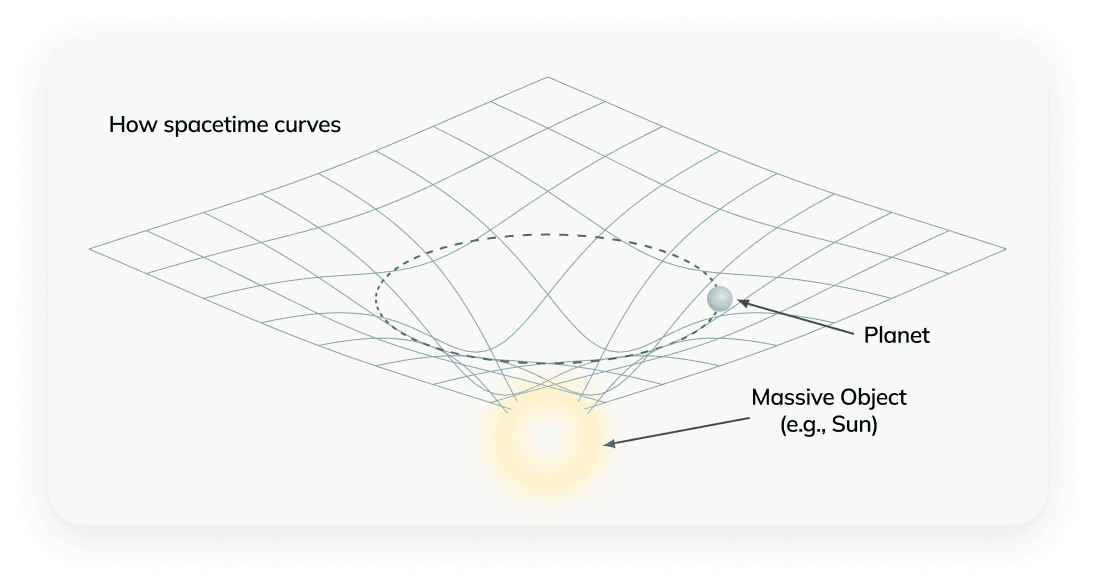
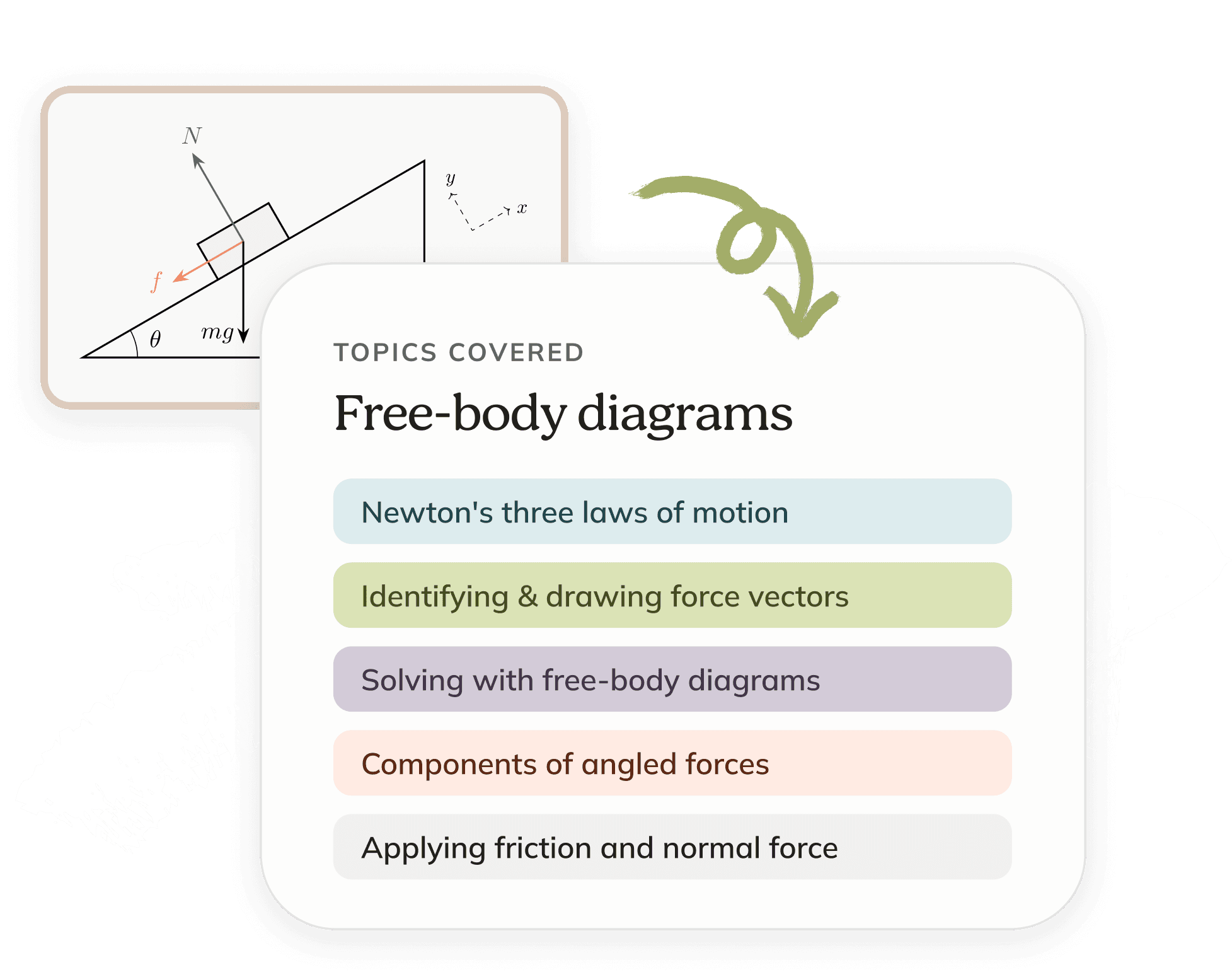
Aristotle draws steps, diagrams, and images to help you learn visually.
Get practice problems tailored to the exact topics you’re struggling with.
From middle-school math to AP exams to SAT/ACT prep. We also build custom plans matched to state standards and specific courses.
Revisit session summaries, session whiteboards, and uploads in one place.
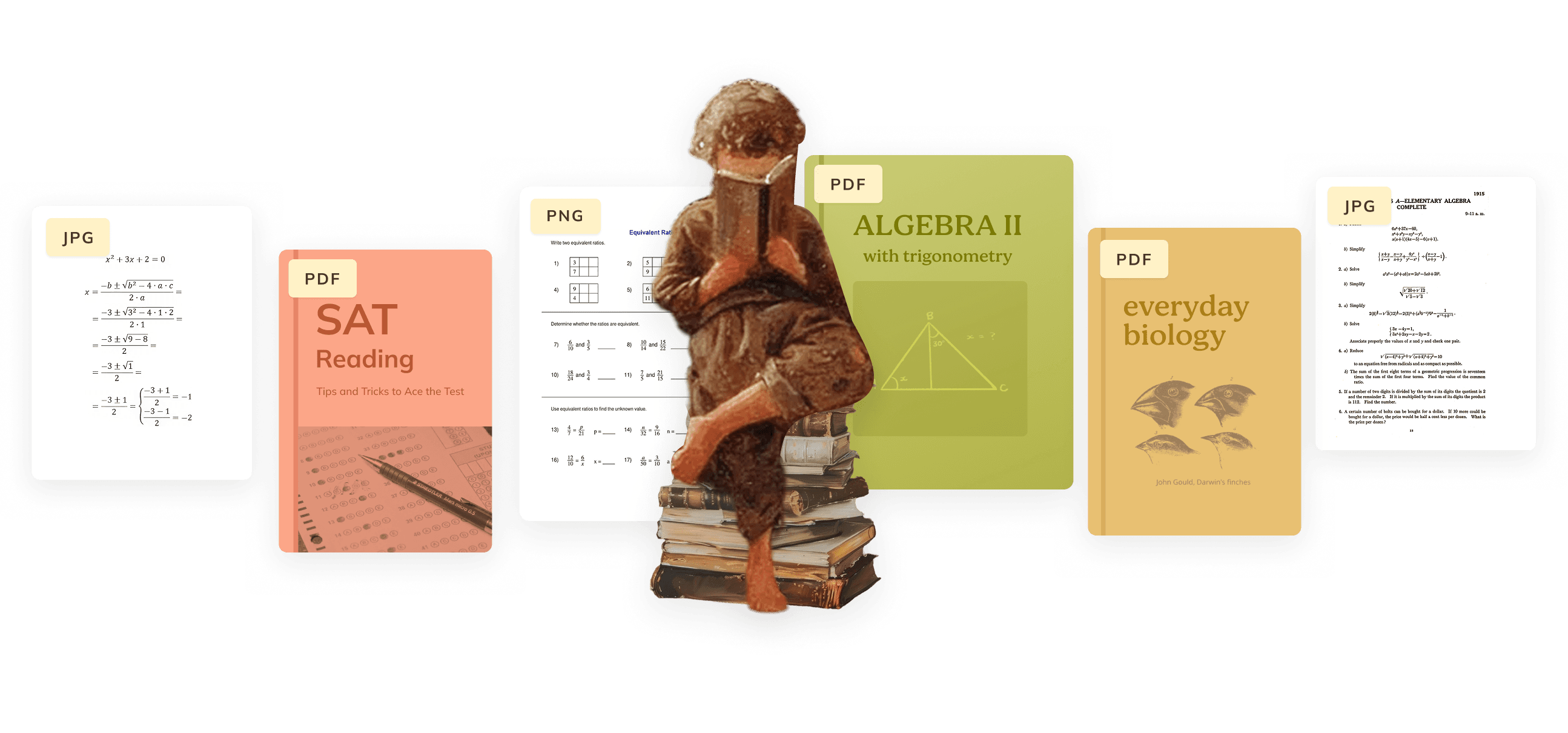
Aristotle can read and navigate any PDFs and images with the learner. That includes textbooks with hundreds of pages!
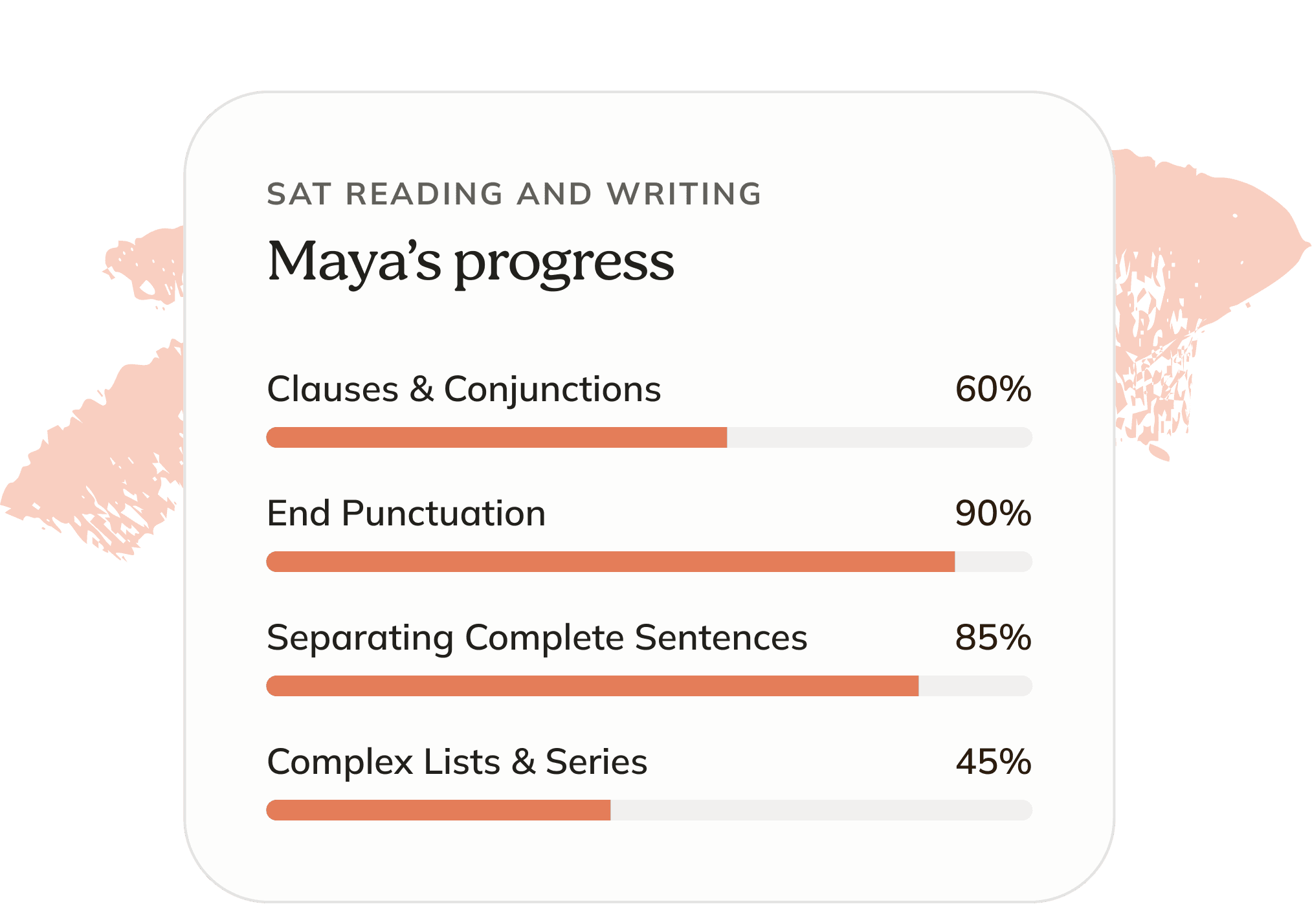
We break all subjects down into granular skills, then track mistakes and mastery on each one. Parents can see the whole picture at a glance.
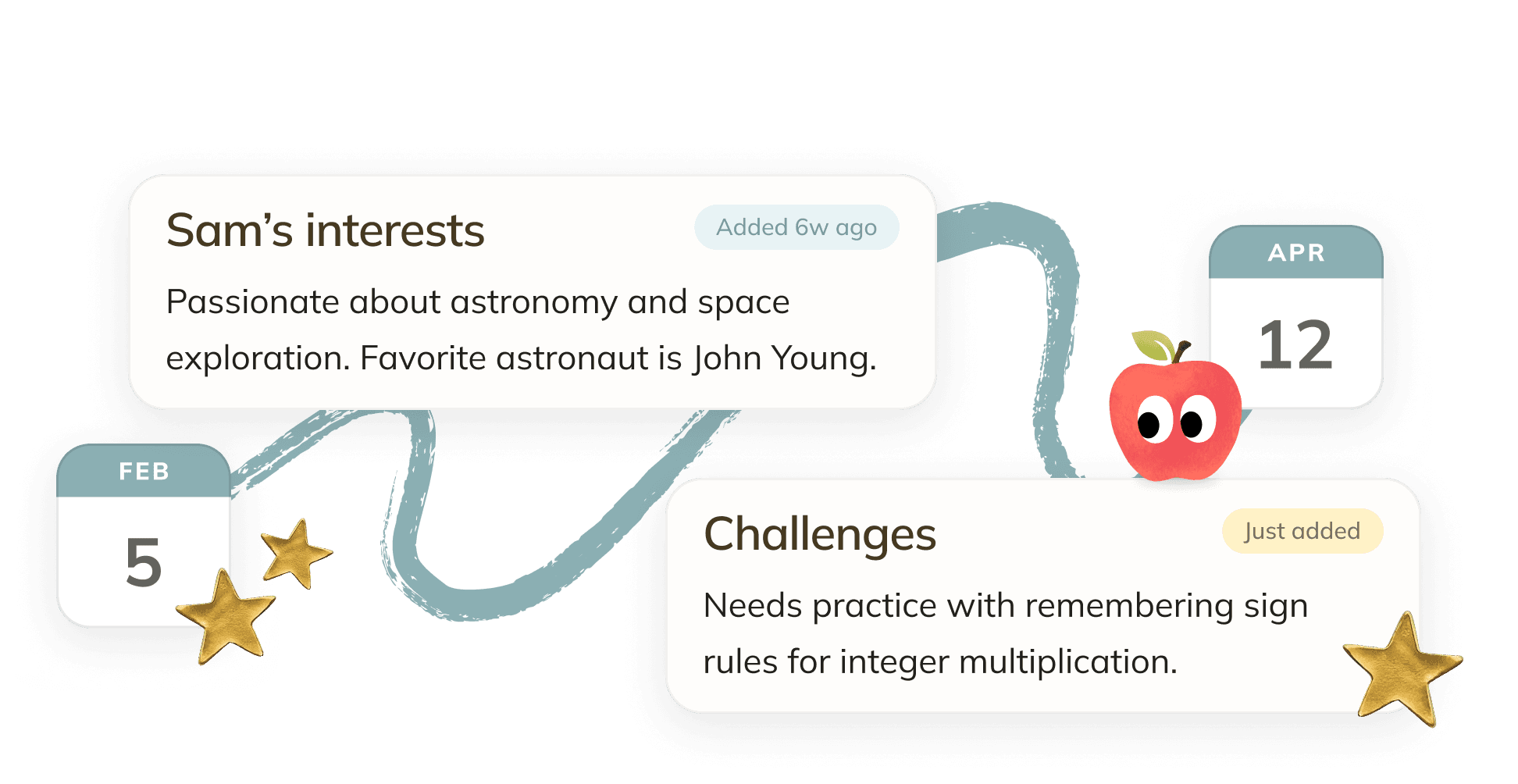
Aristotle remembers every session: what you’ve covered, where you got stuck, how you like things explained. It picks up right where you left off.
The curriculum
Aristotle is designed to always know what to teach at exactly the right time.
Sample curriculum
* Click a topic to see the skills inside
Matter and Measurement
Atomic Structure
Electron Configuration and Periodicity
Chemical Bonding and Molecular Geometry
Chemical Nomenclature and Formulas
The Mole and Stoichiometry
Chemical Reactions and Solution Stoichiometry
Gases
Thermochemistry
Intermolecular Forces, Liquids, and Solids
Solutions and Their Properties
Reaction Kinetics
Chemical Equilibrium
Acids, Bases, and Aqueous Equilibria
Thermodynamics: Entropy and Free Energy
Electrochemistry
Nuclear Chemistry
Organic Chemistry
Chemistry tutoring curriculum175 skills across 18 units
Matter and Measurement
Classifying matter and the quantitative lab skills every later unit relies on: SI units, significant figures, dimensional analysis, and density. Topics: Classifying Matter, Properties and Changes, Measurement, Units, and the Nature of Science, Quantitative Reasoning.
Atomic Structure
The atom as the unit of matter: the development of atomic theory, subatomic particles, isotopes and average atomic mass, and the formation of ions. Topics: Atomic Theory and Models, Subatomic Particles and Atomic Symbols, Isotopes and Atomic Mass, Ions.
Electron Configuration and Periodicity
Electron arrangement in atoms and the periodic trends it produces, the predictive engine of chemistry. Topics: Light, Energy, and the Quantum Model, Electron Configurations, Periodic Trends.
Chemical Bonding and Molecular Geometry
How and why atoms combine: ionic, covalent, and metallic bonding; Lewis structures; molecular shape and polarity. Topics: Bond Types and Electronegativity, Lewis Structures, Molecular Geometry and Polarity, Advanced Bonding Theory.
Chemical Nomenclature and Formulas
Naming compounds and writing formulas, a high-frequency, separately-diagnosable skill family that gates all of stoichiometry. Topics: Ionic Compounds, Molecular Compounds and Acids, Oxidation Numbers.
The Mole and Stoichiometry
The mole concept and the mass-mole-particle calculations at the heart of quantitative chemistry: molar mass, percent composition, formulas, balancing, mass-mass stoichiometry, limiting reactant, and yield. Topics: The Mole and Molar Mass, Composition and Formulas, Balancing Equations, Reaction Stoichiometry.
Chemical Reactions and Solution Stoichiometry
Recognizing reaction types and reactions in aqueous solution: precipitation, acid-base, and redox classification; net ionic equations; molarity; and titration calculations. Topics: Classifying Reactions, Aqueous Reactions, Acid-Base and Redox Reactions, Solution Stoichiometry.
Gases
The behavior of gases: the gas laws, the ideal gas law, kinetic-molecular theory, partial pressures, gas stoichiometry, and deviations from ideal behavior at high pressure and low temperature. Topics: The Gas Laws, The Ideal Gas Law, Gas Mixtures and Stoichiometry, Kinetic-Molecular Theory.
Thermochemistry
Energy changes in chemical and physical processes: heat, enthalpy, calorimetry, Hess's law, and bond energy. Topics: Energy and Heat, Enthalpy and Calorimetry, Hess's Law and Formation Enthalpies.
Intermolecular Forces, Liquids, and Solids
How intermolecular forces determine the properties of condensed phases: phase changes, heating curves, phase diagrams, and types of solids. Topics: Intermolecular Forces, Phase Changes and Diagrams, Solids.
Solutions and Their Properties
The dissolution process, solubility, concentration measures, and colligative properties. Topics: The Dissolution Process, Concentration, Colligative Properties.
Reaction Kinetics
How fast reactions go and why: reaction rates, collision theory, rate laws and integrated rate laws, reaction mechanisms, and catalysis. Topics: Reaction Rates and Collision Theory, Rate Laws, Mechanisms and Catalysis.
Chemical Equilibrium
Dynamic equilibrium and its quantitative treatment: equilibrium constants, the reaction quotient, ICE-table calculations, and Le Châtelier's principle. Topics: Equilibrium and the Equilibrium Constant, Equilibrium Calculations, Le Châtelier's Principle.
Acids, Bases, and Aqueous Equilibria
Acid-base chemistry and its equilibrium applications: definitions, pH, strength, Ka/Kb, neutralization, titration curves, buffers, salt hydrolysis, and solubility equilibria (Ksp). Topics: Acid-Base Definitions and pH, Weak Acid-Base Equilibria, Neutralization, Titration, and Buffers, Solubility Equilibria.
Thermodynamics: Entropy and Free Energy
Why reactions are spontaneous: entropy, the second and third laws, and Gibbs free energy, including the link between ΔG, K, and cell potential. Topics: Entropy and Spontaneity, Gibbs Free Energy.
Electrochemistry
Redox chemistry and its electrical applications: balancing redox reactions, galvanic and electrolytic cells, cell potentials, and the Nernst equation. Topics: Redox Reactions, Electrochemical Cells, Cell Potential and Conditions.
Nuclear Chemistry
Changes in the atomic nucleus: radioactivity, nuclear equations, half-life, and the energy released in fission and fusion. Topics: Radioactivity and Nuclear Equations, Half-Life and Nuclear Energy.
Organic Chemistry
An introduction to carbon chemistry: hydrocarbons, functional groups, isomerism, the major organic reaction types, and polymers. Topics: Hydrocarbons, Functional Groups and Isomerism, Organic Reactions and Polymers.
AP Chemistry tutoring curriculum241 skills across 9 units
Atomic Structure and Properties
AP Exam weighting: 7-9%. Topics: Moles and Molar Mass, Mass Spectra of Elements, Elemental Composition of Pure Substances, Composition of Mixtures, Atomic Structure and Electron Configuration, Photoelectron Spectroscopy, Periodic Trends, Valence Electrons and Ionic Compounds.
Compound Structure and Properties
AP Exam weighting: 7-9%. Topics: Types of Chemical Bonds, Intramolecular Force and Potential Energy, Structure of Ionic Solids, Structure of Metals and Alloys, Lewis Diagrams, Resonance and Formal Charge, VSEPR and Hybridization.
Properties of Substances and Mixtures
AP Exam weighting: 18-22%. Topics: Intermolecular and Interparticle Forces, Properties of Solids, Solids, Liquids, and Gases, Ideal Gas Law, Kinetic Molecular Theory, Deviation from Ideal Gas Law, Solutions and Mixtures, Representations of Solutions, Separation of Solutions and Mixtures, Solubility, Spectroscopy and the Electromagnetic Spectrum, Properties of Photons, Beer-Lambert Law.
Chemical Reactions
AP Exam weighting: 7-9%. Topics: Introduction for Reactions, Net Ionic Equations, Representations of Reactions, Physical and Chemical Changes, Stoichiometry, Introduction to Titration, Types of Chemical Reactions, Introduction to Acid-Base Reactions, Oxidation-Reduction (Redox) Reactions.
Kinetics
AP Exam weighting: 7-9%. Topics: Reaction Rates, Introduction to Rate Law, Concentration Changes Over Time, Elementary Reactions, Collision Model, Reaction Energy Profile, Introduction to Reaction Mechanisms, Reaction Mechanism and Rate Law, Pre-Equilibrium Approximation, Multistep Reaction Energy Profile, Catalysis.
Thermochemistry
AP Exam weighting: 7-9%. Topics: Endothermic and Exothermic Processes, Energy Diagrams, Heat Transfer and Thermal Equilibrium, Heat Capacity and Calorimetry, Energy of Phase Changes, Introduction to Enthalpy of Reaction, Bond Enthalpies, Enthalpy of Formation, Hess’s Law.
Equilibrium
AP Exam weighting: 7-9%. Topics: Introduction to Equilibrium, Direction of Reversible Reactions, Reaction Quotient and Equilibrium Constant, Calculating the Equilibrium Constant, Magnitude of the Equilibrium Constant, Properties of the Equilibrium Constant, Calculating Equilibrium Concentrations, Representations of Equilibrium, Introduction to Le Châtelier’s Principle, Reaction Quotient and Le Châtelier’s Principle, Introduction to Solubility Equilibria, Common-Ion Effect.
Acids and Bases
AP Exam weighting: 11-15%. Topics: Introduction to Acids and Bases, pH and pOH of Strong Acids and Bases, Weak Acid and Base Equilibria, Acid-Base Reactions and Buf fers, Acid-Base Titrations, Molecular Structure of Acids and Bases, pH and pKa, Properties of Buf fers, Henderson-Hasselbalch Equation, Buffer Capacity, pH and Solubility.
Thermodynamics and Electrochemistry
AP Exam weighting: 7-9%. Topics: Introduction to Entropy, Absolute Entropy and Entropy Change, Gibbs Free Energy and Thermodynamic Favorability, Thermodynamic and Kinetic Control, Free Energy and Equilibrium, Free Energy of Dissolution, Coupled Reactions, Galvanic (Voltaic) and Electrolytic Cells, Cell Potential and Free Energy, Cell Potential Under Nonstandard Conditions, Electrolysis and Faraday’s Law.
Organic Chemistry tutoring curriculum205 skills across 17 units
Structure, Bonding, and Representations
Drawing, bonding, charge, resonance, orbital, and functional-group language for organic molecules. Topics: Organic Representations, Bonding and Hybridization, Formal Charge and Resonance, Functional Groups.
Acids, Bases, and Electronic Effects
Reusable pKa, nucleophile/electrophile, induction, resonance, and noncovalent reasoning. Topics: Acid-Base Reasoning, Electronic Effects, Nucleophiles and Electrophiles, Intermolecular Forces.
Isomerism, Conformation, and Stereochemistry
Constitutional isomers, conformations, cyclohexanes, chirality, stereochemical labels, and stereoisomer relationships. Topics: Constitutional Isomerism and Nomenclature, Conformational Analysis, Configuration Labels, Stereoisomer Relationships.
Mechanisms, Energy, and Reaction Strategy
Curved-arrow electron flow, intermediates, energy profiles, rate laws, selectivity, and reaction-category reasoning. Topics: Curved-Arrow Mechanisms, Reaction Energy and Rates, Selectivity and Rearrangements, Reaction Strategy.
Alkanes, Cycloalkanes, and Radical Chemistry
Saturated hydrocarbons, strain, combustion, radical halogenation, and radical mechanisms. Topics: Alkanes and Cycloalkanes, Radical Reactions.
Alkenes and Alkynes
Pi-bond structure, addition selectivity, synthesis, reduction, oxidation, and cleavage. Topics: Alkene Addition Reactions, Alkyne Reactions, Pi-Bond Synthesis and Strategy.
Substitution and Elimination
Alkyl halide reactions, SN1/SN2/E1/E2 mechanisms, substrate/reagent/solvent effects, and competition. Topics: SN2 Reactions, SN1 Reactions, E1 and E2 Reactions, Substitution-Elimination Competition.
Spectroscopy and Structure Determination
Mass spectrometry, IR, NMR, UV-visible patterns, and combined structure-elucidation problems. Topics: Mass Spectrometry, Infrared Spectroscopy, NMR Spectroscopy, Combined Structure Determination.
Conjugation and Aromaticity
Conjugated systems, diene reactivity, aromatic criteria, antiaromaticity, and heteroaromatic electron counting. Topics: Conjugated Systems, Aromaticity.
Aromatic Reactions
Electrophilic and nucleophilic aromatic substitution, directing effects, benzylic chemistry, and aromatic synthesis. Topics: Electrophilic Aromatic Substitution, Aromatic Synthesis.
Alcohols, Phenols, Ethers, Epoxides, and Sulfur Compounds
Oxygen and sulfur functional groups, oxidation/reduction, substitution, protection, and epoxide chemistry. Topics: Alcohols and Phenols, Oxidation and Reduction, Ethers and Epoxides, Sulfur Compounds and Protecting Groups.
Aldehydes and Ketones: Carbonyl Addition
Carbonyl polarity, aldehyde and ketone nomenclature, nucleophilic addition, hydride, organometallic, and derivative-forming reactions. Topics: Carbonyl Structure and Reactivity, Aldehyde and Ketone Additions.
Carboxylic Acids and Derivatives: Acyl Substitution
Carboxylic acids, nitriles, acid derivatives, reactivity order, interconversion, reductions, and addition-elimination mechanisms. Topics: Carboxylic Acids and Nitriles, Nucleophilic Acyl Substitution.
Enols, Enolates, and Condensations
Alpha acidity, enolate formation, alpha substitution, aldol and Claisen chemistry, conjugate addition, and carbon-carbon bond synthesis. Topics: Enols and Enolates, Aldol Reactions, Claisen and Related Condensations, Conjugate Addition.
Amines and Heterocycles
Nitrogen functional groups, amine basicity, amine synthesis and reactions, diazonium chemistry, and heterocycle patterns. Topics: Amine Properties and Synthesis, Amine Reactions, Heterocycles.
Multistep Synthesis and Retrosynthesis
Multistep synthesis planning, reagent choice, functional-group interconversion, protecting groups, route comparison, and strategy. Topics: Multistep Synthesis and Retrosynthesis.
Bioorganic Molecules and Materials
Bioorganic molecules and materials: the structures and characteristic reactions of carbohydrates, amino acids, peptides and proteins, lipids, and nucleic acids; the orbital-symmetry treatment of pericyclic reactions (cycloadditions, electrocyclizations, and sigmatropic rearrangements) that builds on the conjugation and Diels-Alder work; and the formation, classification, and structure-property relationships of synthetic polymers. Topics: Biomolecules, Pericyclic Reactions, Polymers and Materials.
My son told me yesterday that we should cancel his human tutor, because Aristotle is doing a better job. The human tutor was $250/hour.

A few things you might wonder before getting started.
Aristotle tutors high school chemistry, AP Chemistry, and a full introductory Organic Chemistry sequence. Every course is built on a curriculum map of more than 600 individually tracked skills, from atomic structure and the mole through equilibrium, thermodynamics, and reaction mechanisms, so the tutor always knows what your child has mastered and what comes next.
Check out our most recent blog posts.

This could be you
For homework, supporting your child, or anything you’ve always wanted to know more about, Aristotle makes it easy for anyone to learn out loud.