College Board framework
Every AP Chemistry skill maps to a unit and topic in the College Board's course and exam description, so sessions match what the exam tests.

AP Chemistry
Pioneered by Stanford AI researchers and learning scientists, Aristotle is the world's first voice-based AI chemistry tutor. Built for the AP Chemistry course and exam, Aristotle has improved thousands of grades over 22% within a week.
Trusted by families at













Fits your child's AP Chemistry class
Every AP Chemistry skill maps to a unit and topic in the College Board's course and exam description, so sessions match what the exam tests.
Share your teacher's syllabus, textbook, or pacing guide and sessions follow your child's actual AP class.
Aiming for a 5, or just to pass? Aristotle builds the path backwards from your target score and the May exam date.
Features
Talk things through, work side by side, and come back next time to a tutor who remembers where you left off.
Ask questions out loud, hear explanations in Aristotle’s voice, and interrupt whenever you need to.
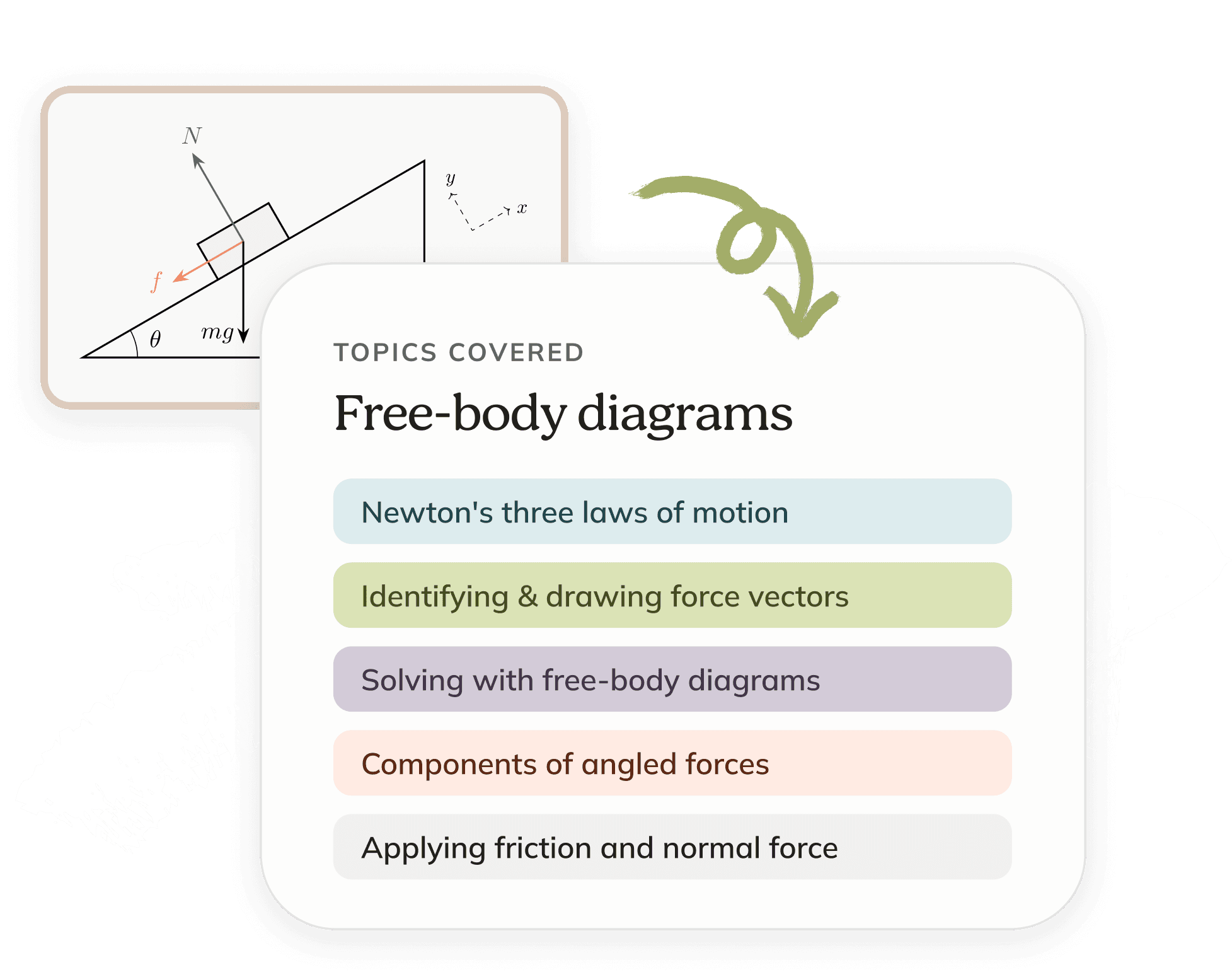
Aristotle draws steps, diagrams, and images to help you learn visually.
Get practice problems tailored to the exact topics you’re struggling with.
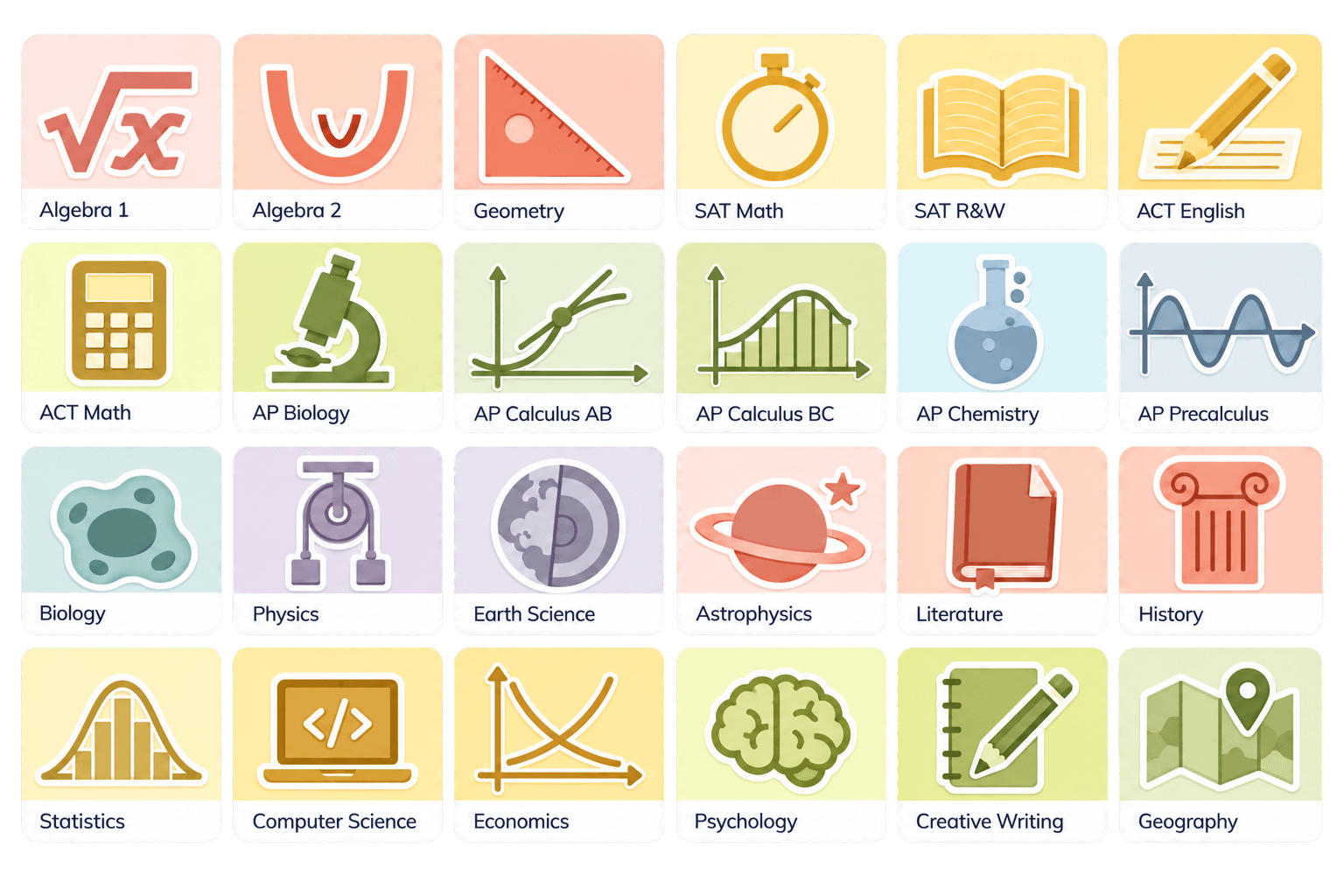
From middle-school math to AP exams to SAT/ACT prep. We also build custom plans matched to state standards and specific courses.
Revisit session summaries, session whiteboards, and uploads in one place.
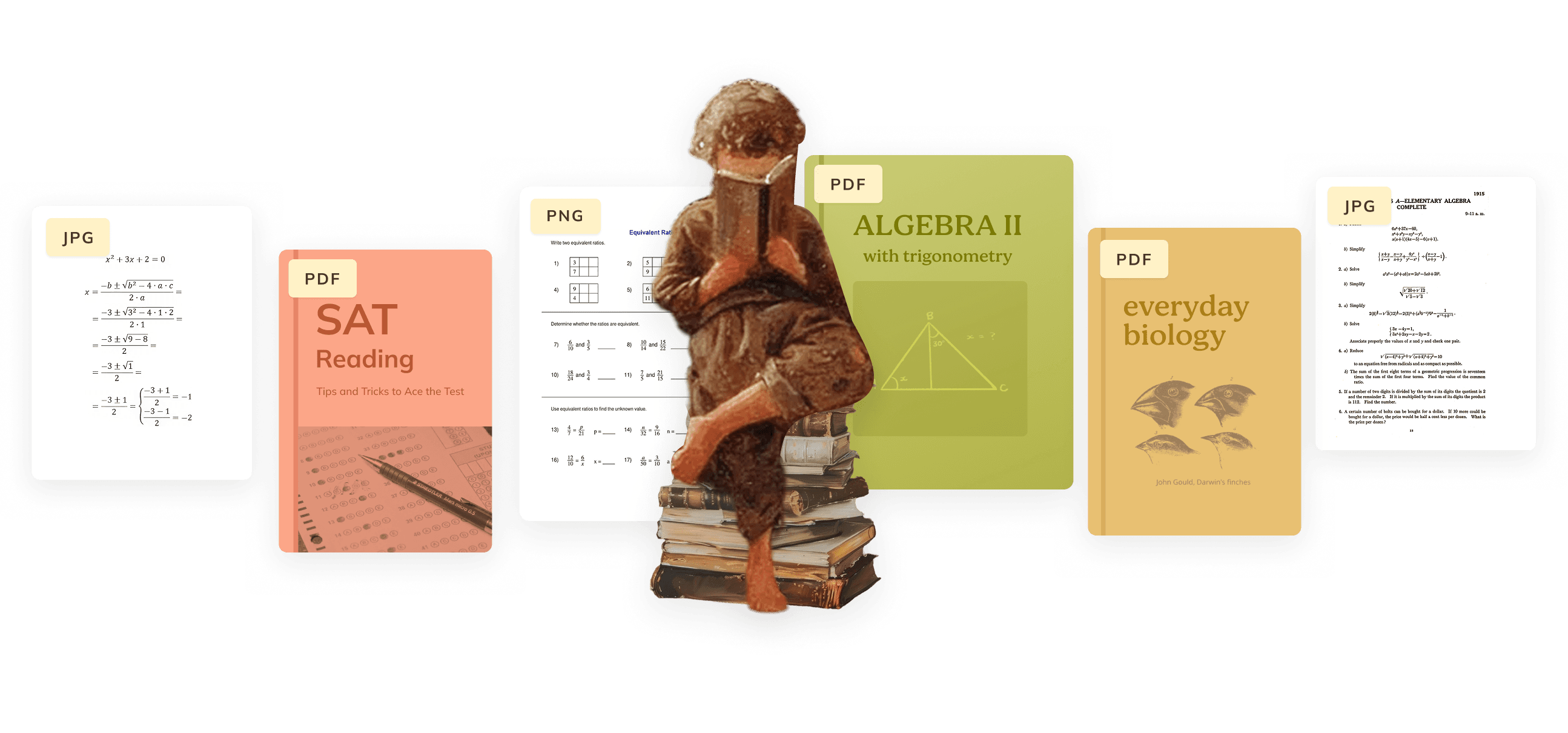
Aristotle can read and navigate any PDFs and images with the learner. That includes textbooks with hundreds of pages!
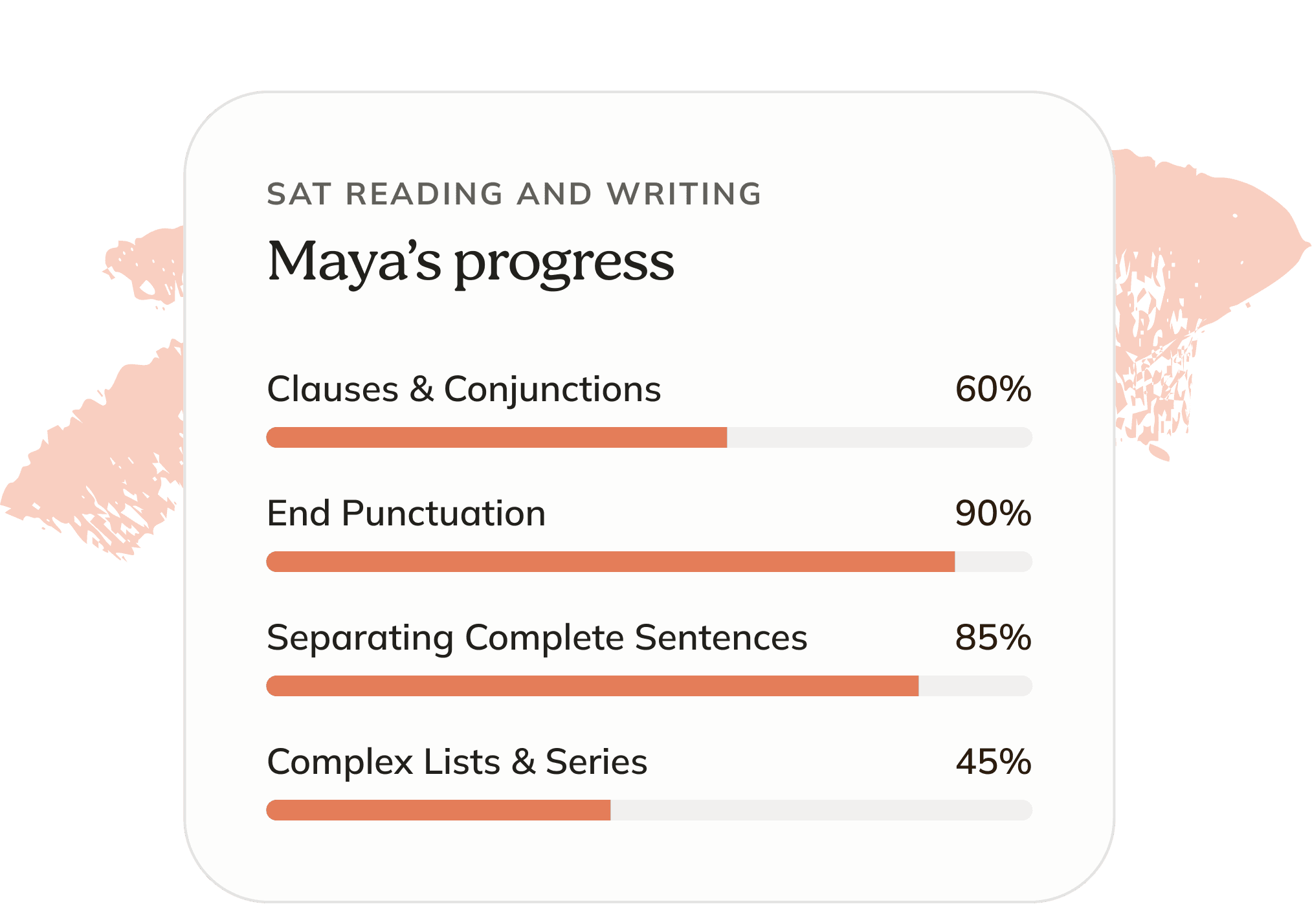
We break all subjects down into granular skills, then track mistakes and mastery on each one. Parents can see the whole picture at a glance.
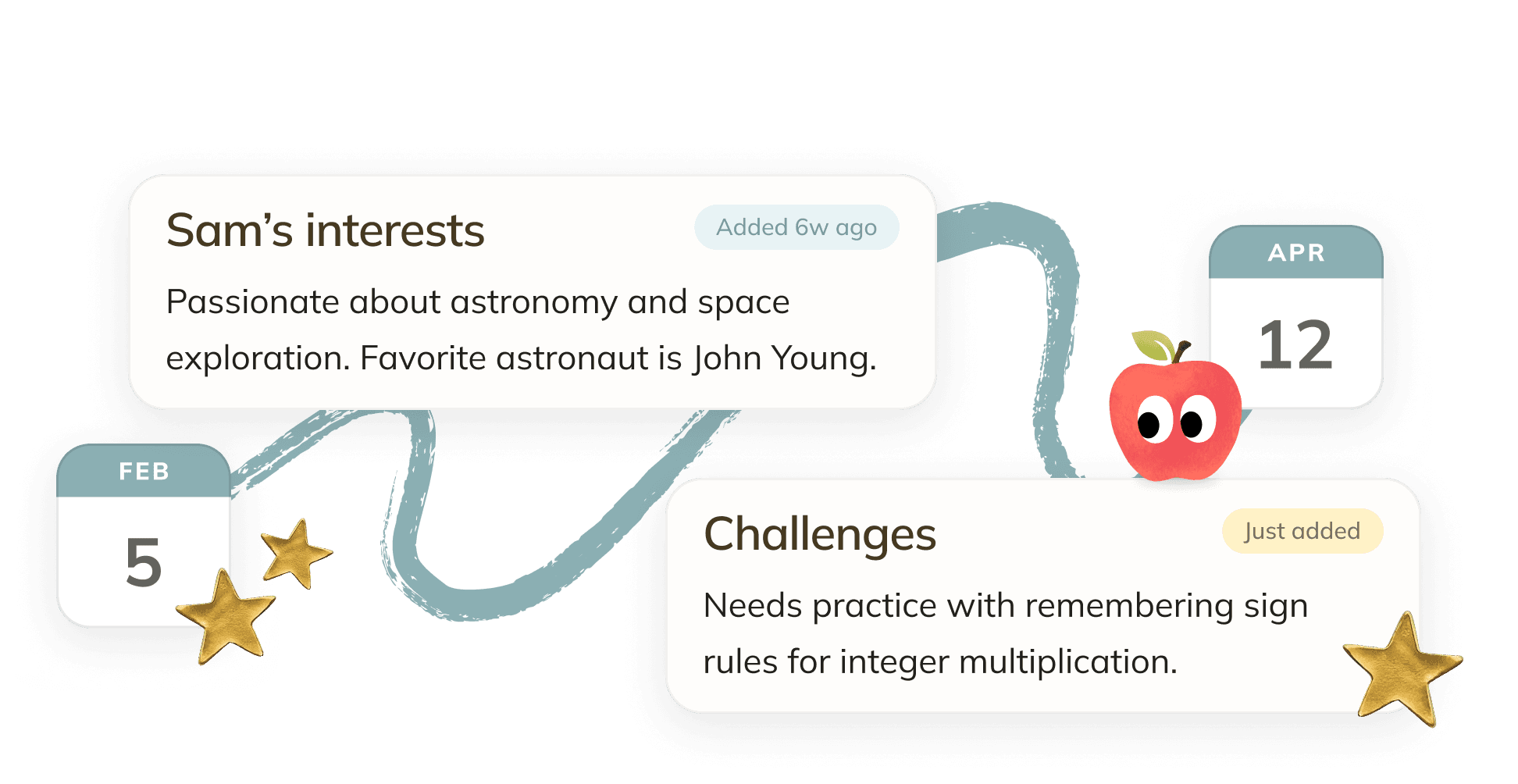
Aristotle remembers every session: what you’ve covered, where you got stuck, how you like things explained. It picks up right where you left off.
The curriculum
Aristotle is designed to always know what to teach at exactly the right time.
Sample curriculum
+ 7 more science subjects available
* Click a topic to see the skills inside
Atomic Structure and Properties
Compound Structure and Properties
Properties of Substances and Mixtures
Chemical Reactions
Kinetics
Thermochemistry
Equilibrium
Acids and Bases
Thermodynamics and Electrochemistry
AP Chemistry tutoring curriculum241 skills across 9 units
Atomic Structure and Properties
AP Exam weighting: 7-9%. Topics: Moles and Molar Mass, Mass Spectra of Elements, Elemental Composition of Pure Substances, Composition of Mixtures, Atomic Structure and Electron Configuration, Photoelectron Spectroscopy, Periodic Trends, Valence Electrons and Ionic Compounds.
Compound Structure and Properties
AP Exam weighting: 7-9%. Topics: Types of Chemical Bonds, Intramolecular Force and Potential Energy, Structure of Ionic Solids, Structure of Metals and Alloys, Lewis Diagrams, Resonance and Formal Charge, VSEPR and Hybridization.
Properties of Substances and Mixtures
AP Exam weighting: 18-22%. Topics: Intermolecular and Interparticle Forces, Properties of Solids, Solids, Liquids, and Gases, Ideal Gas Law, Kinetic Molecular Theory, Deviation from Ideal Gas Law, Solutions and Mixtures, Representations of Solutions, Separation of Solutions and Mixtures, Solubility, Spectroscopy and the Electromagnetic Spectrum, Properties of Photons, Beer-Lambert Law.
Chemical Reactions
AP Exam weighting: 7-9%. Topics: Introduction for Reactions, Net Ionic Equations, Representations of Reactions, Physical and Chemical Changes, Stoichiometry, Introduction to Titration, Types of Chemical Reactions, Introduction to Acid-Base Reactions, Oxidation-Reduction (Redox) Reactions.
Kinetics
AP Exam weighting: 7-9%. Topics: Reaction Rates, Introduction to Rate Law, Concentration Changes Over Time, Elementary Reactions, Collision Model, Reaction Energy Profile, Introduction to Reaction Mechanisms, Reaction Mechanism and Rate Law, Pre-Equilibrium Approximation, Multistep Reaction Energy Profile, Catalysis.
Thermochemistry
AP Exam weighting: 7-9%. Topics: Endothermic and Exothermic Processes, Energy Diagrams, Heat Transfer and Thermal Equilibrium, Heat Capacity and Calorimetry, Energy of Phase Changes, Introduction to Enthalpy of Reaction, Bond Enthalpies, Enthalpy of Formation, Hess’s Law.
Equilibrium
AP Exam weighting: 7-9%. Topics: Introduction to Equilibrium, Direction of Reversible Reactions, Reaction Quotient and Equilibrium Constant, Calculating the Equilibrium Constant, Magnitude of the Equilibrium Constant, Properties of the Equilibrium Constant, Calculating Equilibrium Concentrations, Representations of Equilibrium, Introduction to Le Châtelier’s Principle, Reaction Quotient and Le Châtelier’s Principle, Introduction to Solubility Equilibria, Common-Ion Effect.
Acids and Bases
AP Exam weighting: 11-15%. Topics: Introduction to Acids and Bases, pH and pOH of Strong Acids and Bases, Weak Acid and Base Equilibria, Acid-Base Reactions and Buf fers, Acid-Base Titrations, Molecular Structure of Acids and Bases, pH and pKa, Properties of Buf fers, Henderson-Hasselbalch Equation, Buffer Capacity, pH and Solubility.
Thermodynamics and Electrochemistry
AP Exam weighting: 7-9%. Topics: Introduction to Entropy, Absolute Entropy and Entropy Change, Gibbs Free Energy and Thermodynamic Favorability, Thermodynamic and Kinetic Control, Free Energy and Equilibrium, Free Energy of Dissolution, Coupled Reactions, Galvanic (Voltaic) and Electrolytic Cells, Cell Potential and Free Energy, Cell Potential Under Nonstandard Conditions, Electrolysis and Faraday’s Law.
My son told me yesterday that we should cancel his human tutor, because Aristotle is doing a better job. The human tutor was $250/hour.

A few things you might wonder before getting started.
Aristotle's AP Chemistry course maps 241 skills to all nine units of the College Board framework: Atomic Structure and Properties, Compound Structure and Properties, Properties of Substances and Mixtures, Chemical Reactions, Kinetics, Thermochemistry, Equilibrium, Acids and Bases, and Thermodynamics and Electrochemistry. Every skill is tied to the framework and linked to its prerequisites, so the tutor always knows which part of the course your child has mastered and what still needs work.
Check out our most recent blog posts.

This could be you
For homework, supporting your child, or anything you’ve always wanted to know more about, Aristotle makes it easy for anyone to learn out loud.