College Board framework
Every AP Precalculus skill maps to a unit and topic in the College Board's course and exam description, so sessions match what the exam tests.

AP Precalculus
Pioneered by Stanford AI researchers and learning scientists, Aristotle is the world's first voice-based AI precalculus tutor. Built for the AP Precalculus course and exam, Aristotle has improved thousands of grades over 22% within a week.
Trusted by families at














Fits your child's AP Precalculus class
Every AP Precalculus skill maps to a unit and topic in the College Board's course and exam description, so sessions match what the exam tests.
Share your teacher's syllabus, textbook, or pacing guide and sessions follow your child's actual AP class.
Aiming for a 5, or just to pass? Aristotle builds the path backwards from your target score and the May exam date.
Features
Talk things through, work side by side, and come back next time to a tutor who remembers where you left off.
Ask questions out loud, hear explanations in Aristotle’s voice, and interrupt whenever you need to.
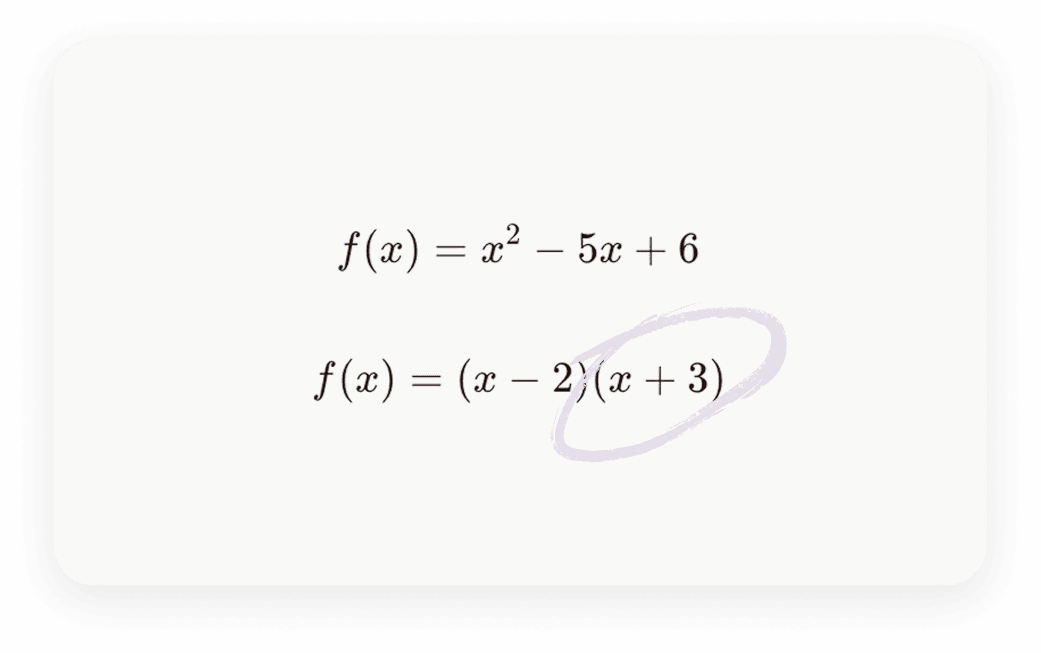
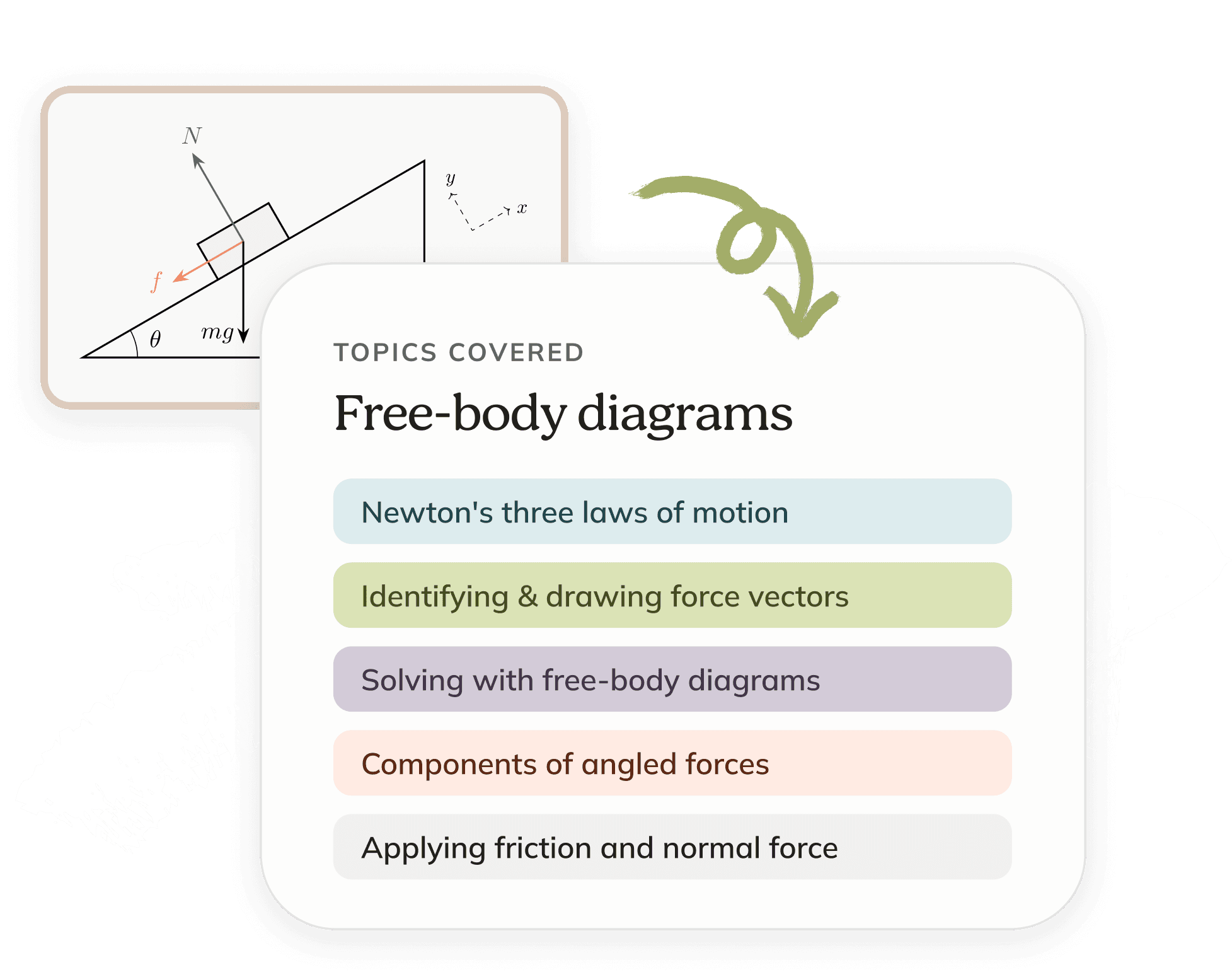
Aristotle draws steps, diagrams, and images to help you learn visually.
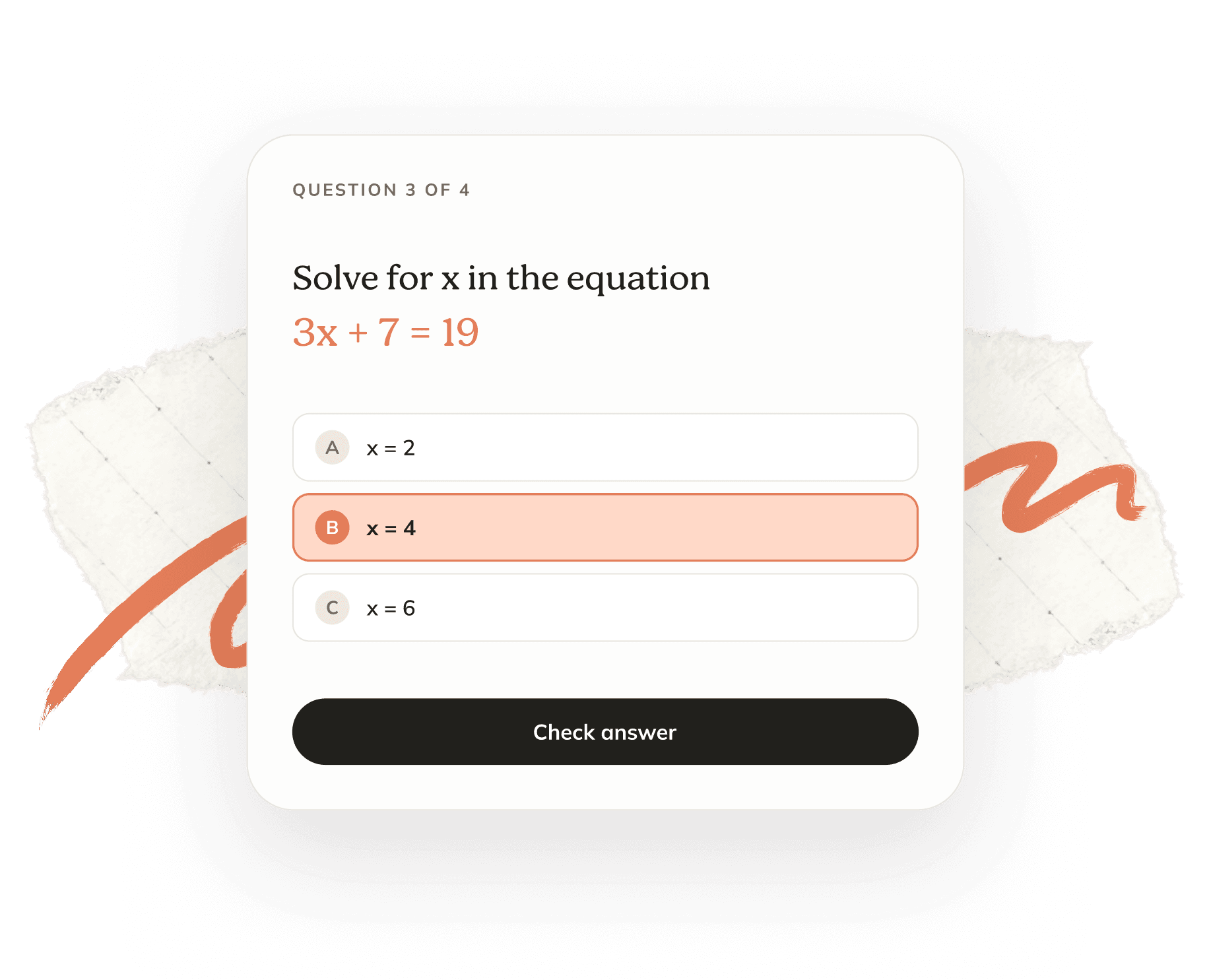
Get practice problems tailored to the exact topics you’re struggling with.
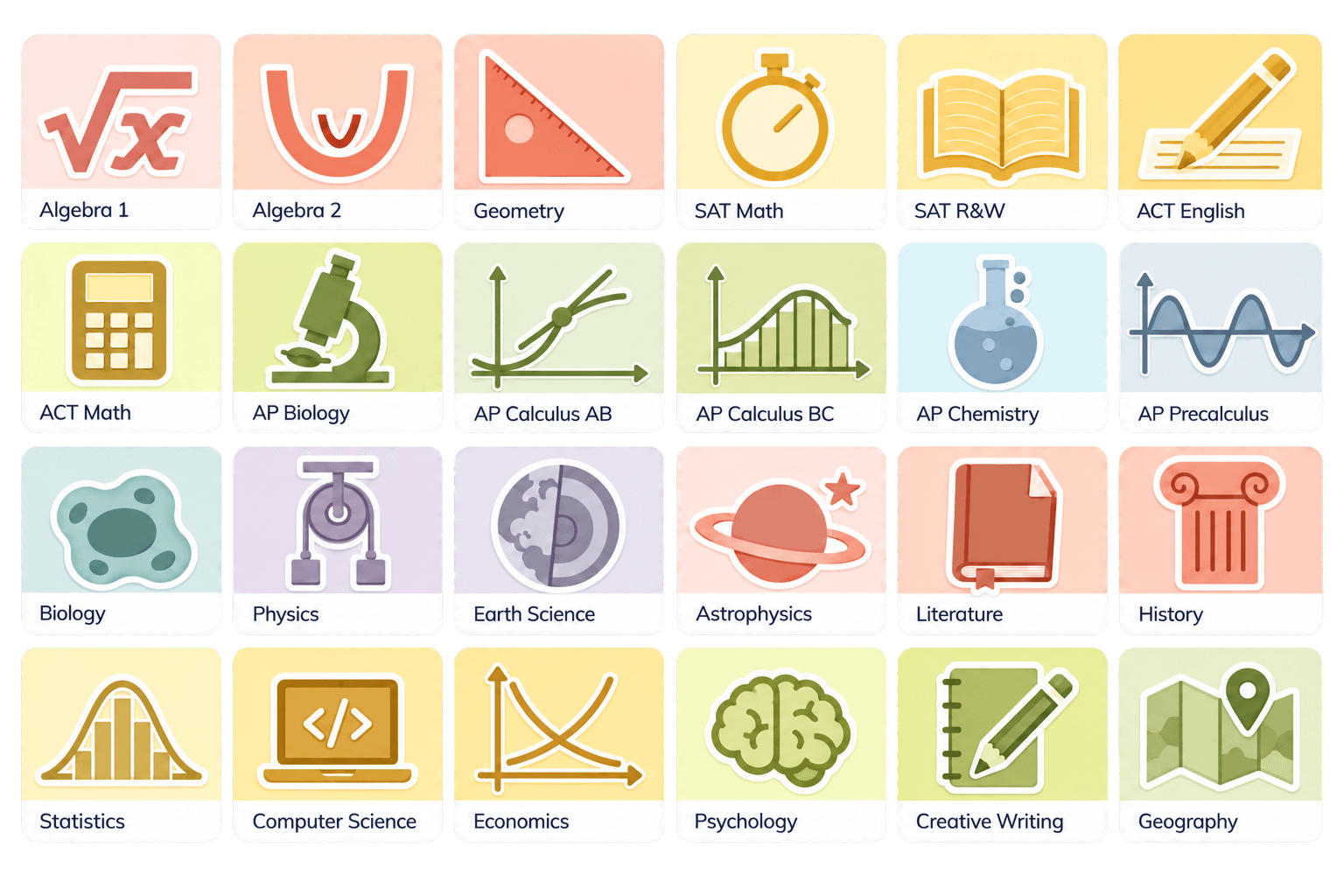
From middle-school math to AP exams to SAT/ACT prep. We also build custom plans matched to state standards and specific courses.
Revisit session summaries, session whiteboards, and uploads in one place.
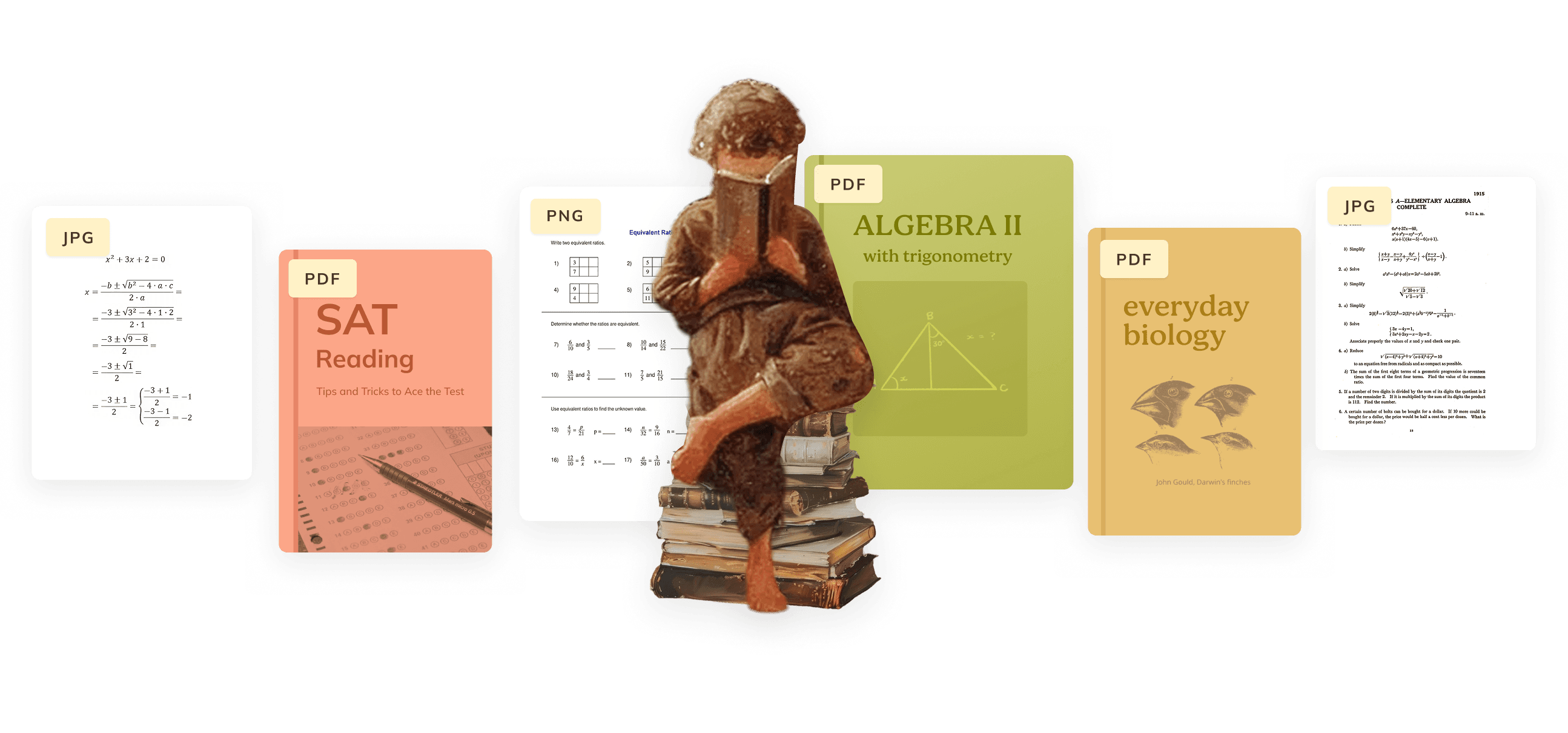
Aristotle can read and navigate any PDFs and images with the learner. That includes textbooks with hundreds of pages!
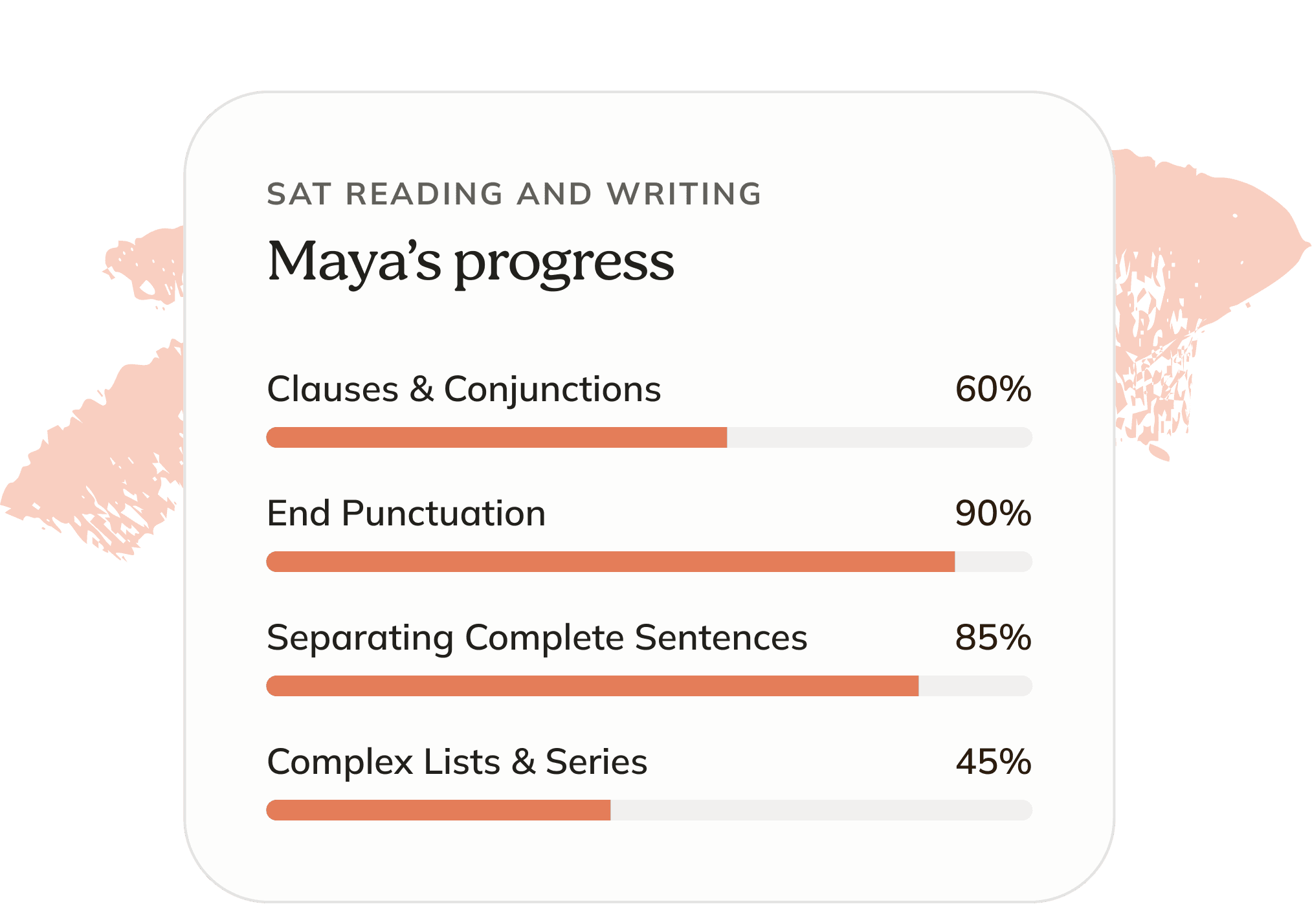
We break all subjects down into granular skills, then track mistakes and mastery on each one. Parents can see the whole picture at a glance.
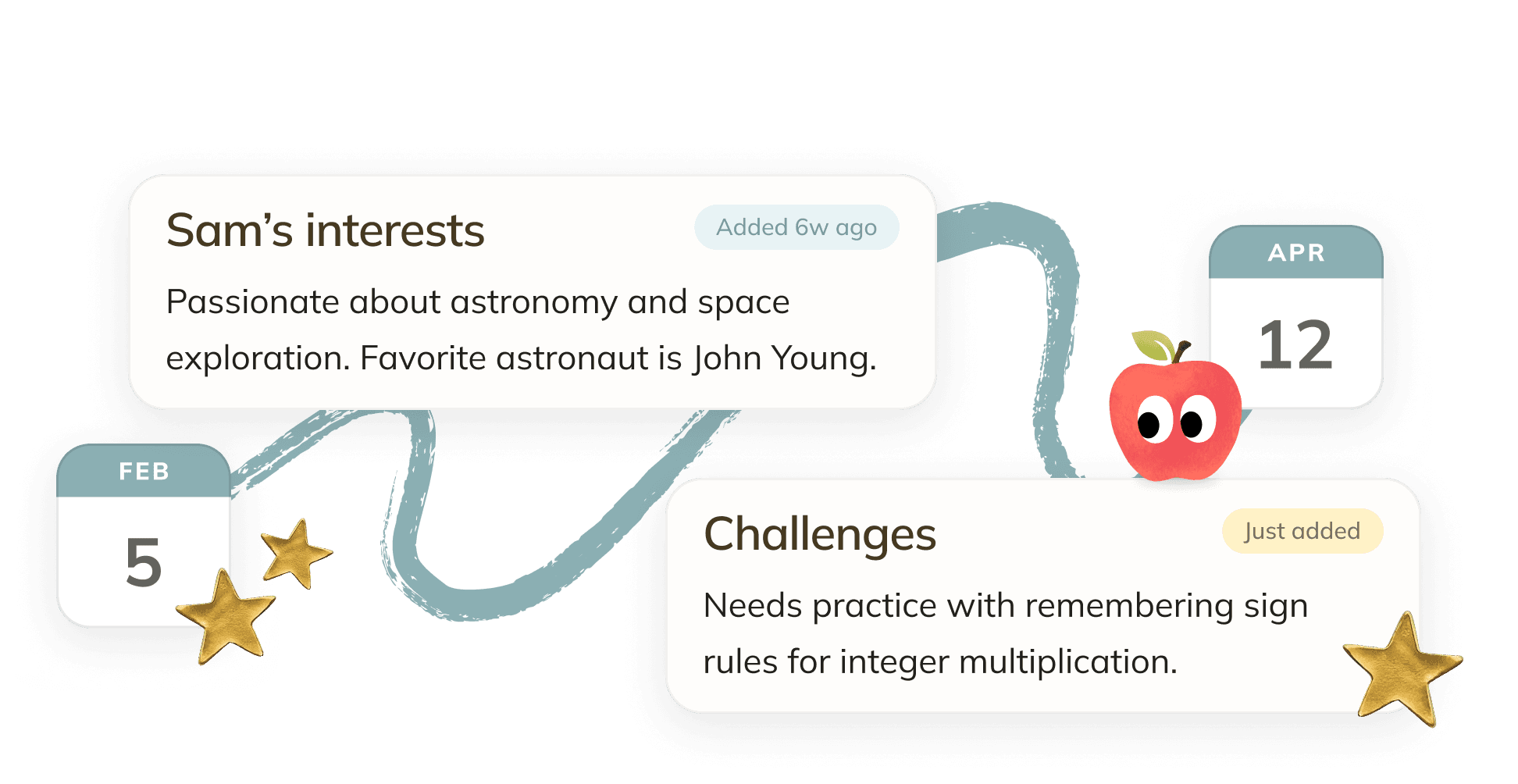
Aristotle remembers every session: what you’ve covered, where you got stuck, how you like things explained. It picks up right where you left off.
The curriculum
Aristotle is designed to always know what to teach at exactly the right time.
Sample curriculum
+ 9 more math subjects available
* Click a topic to see the skills inside
Polynomial and Rational Functions
Exponential and Logarithmic Functions
Trigonometric and Polar Functions
Functions Involving Parameters, Vectors, and Matrices
AP Precalculus tutoring curriculum303 skills across 4 units
Polynomial and Rational Functions
AP Exam weighting: 30-40%. Topics: Change in Tandem, Rates of Change, Rates of Change in Linear and Quadratic Functions, Polynomial Functions and Rates of Change, Polynomial Functions and Complex Zeros, Polynomial Functions and End Behavior, Rational Functions and End Behavior, Rational Functions and Zeros, Rational Functions and Vertical Asymptotes, Rational Functions and Holes, Equivalent Representations of Polynomial and Rational Expressions, Transformations of Functions, Function Model Selection and Assumption Articulation, Function Model Construction and Application.
Exponential and Logarithmic Functions
AP Exam weighting: 27-40%. Topics: Change in Arithmetic and Geometric Sequences, Change in Linear and Exponential Functions, Exponential Functions, Exponential Function Manipulation, Exponential Function Context and Data Modeling, Competing Function Model Validation, Composition of Functions, Inverse Functions, Logarithmic Expressions, Inverses of Exponential Functions, Logarithmic Functions, Logarithmic Function Manipulation, Exponential and Logarithmic Equations and Inequalities, Logarithmic Function Context and Data Modeling, Semi-log Plots.
Trigonometric and Polar Functions
AP Exam weighting: 30-35%. Topics: Periodic Phenomena, Sine, Cosine, and Tangent, Sine and Cosine Function Values, Sine and Cosine Function Graphs, Sinusoidal Functions, Sinusoidal Function Transformations, Sinusoidal Function Context and Data Modeling, The Tangent Function, Inverse Trigonometric Functions, Trigonometric Equations and Inequalities, The Secant, Cosecant, and Cotangent Functions, Equivalent Representations of Trigonometric Functions, Trigonometry and Polar Coordinates, Polar Function Graphs, Rates of Change in Polar Functions.
Functions Involving Parameters, Vectors, and Matrices
AP Exam weighting: not assessed on the AP Exam. Topics: Parametric Functions, Parametric Functions Modeling Planar Motion, Parametric Functions and Rates of Change, Parametrically Defined Circles and Lines, Implicitly Defined Functions, Conic Sections, Parametrization of Implicitly Defined Functions, Vectors, Vector-Valued Functions, Matrices, The Inverse and Determinant of a Matrix, Linear Transformations and Matrices, Matrices as Functions, Matrices Modeling Contexts.
My son told me yesterday that we should cancel his human tutor, because Aristotle is doing a better job. The human tutor was $250/hour.

A few things you might wonder before getting started.
Aristotle's AP Precalculus course maps 303 skills to the four units of the College Board framework: Polynomial and Rational Functions, Exponential and Logarithmic Functions, Trigonometric and Polar Functions, and Functions Involving Parameters, Vectors, and Matrices. Every skill is tied to the framework and linked to its prerequisites, so the tutor always knows which part of the course your child has mastered and what still needs work.
Check out our most recent blog posts.

This could be you
For homework, supporting your child, or anything you’ve always wanted to know more about, Aristotle makes it easy for anyone to learn out loud.