The standard calculus sequence
The courses follow the AP AB and BC frameworks, the same limits, derivatives, integrals, and series sequence taught in college Calculus I and II.

High school & college
Pioneered by Stanford AI researchers and learning scientists, Aristotle is the world's first voice-based AI calculus tutor. Whether it's high school calculus or college Calc I and II, Aristotle has improved thousands of grades over 22% within a week.
Trusted by families at
















Fits the class they're taking
The courses follow the AP AB and BC frameworks, the same limits, derivatives, integrals, and series sequence taught in college Calculus I and II.
Share the syllabus, textbook, or problem sets and sessions follow the actual course, whether that's a high school class, AP, or a university lecture.
Passing the class, a final exam next month, or getting ahead over the summer? Aristotle builds the path backwards from your goal.
Features
Talk things through, work side by side, and come back next time to a tutor who remembers where you left off.
Ask questions out loud, hear explanations in Aristotle’s voice, and interrupt whenever you need to.
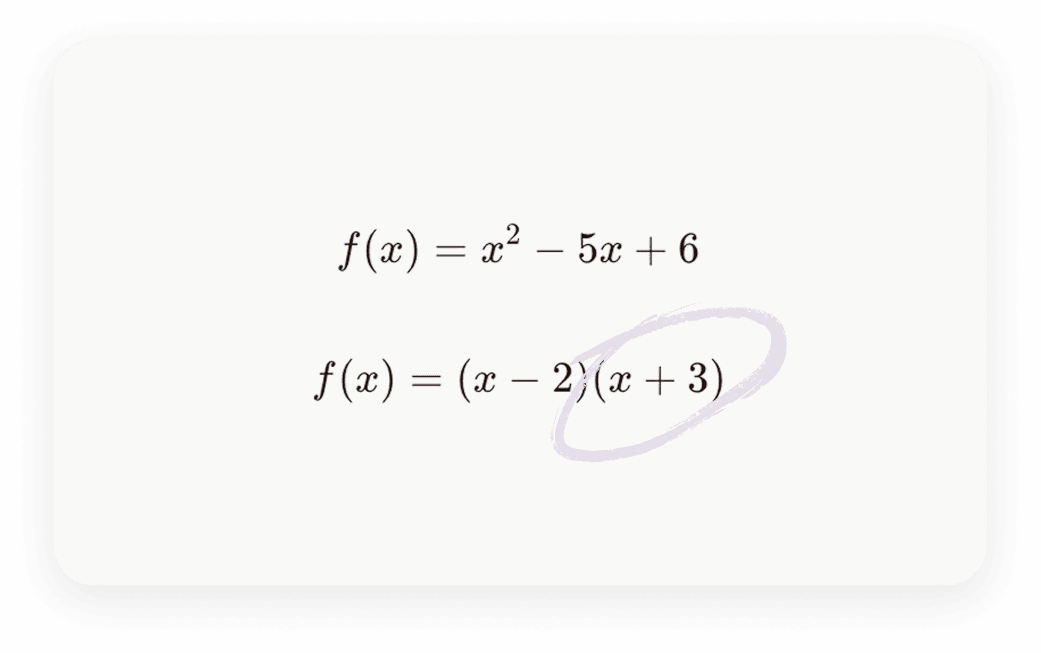
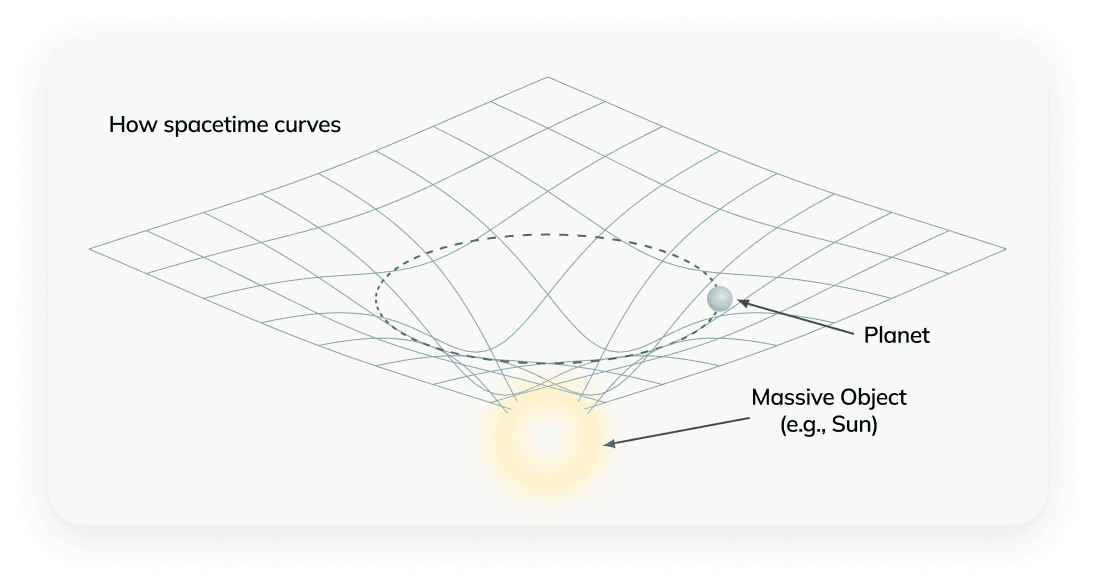
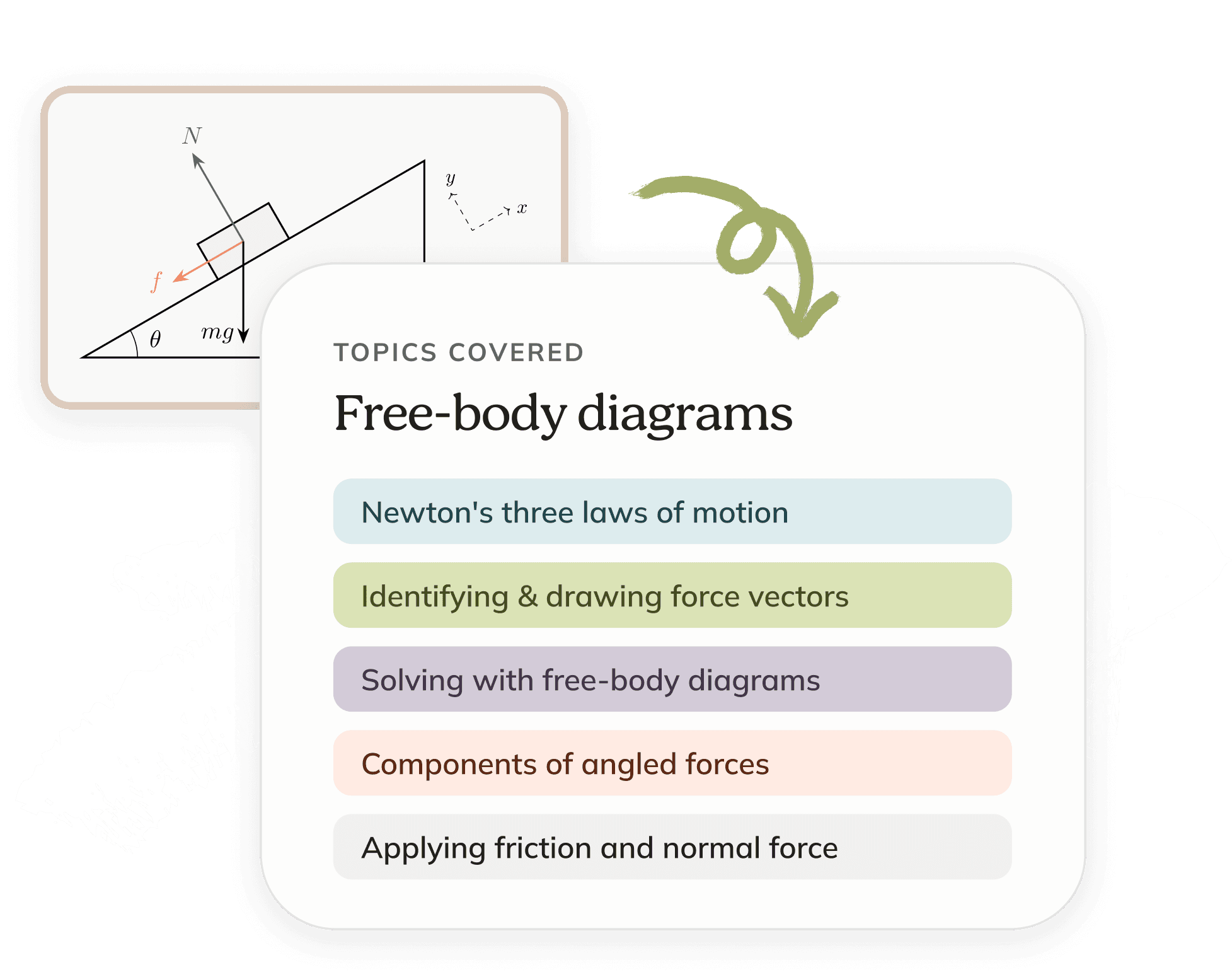
Aristotle draws steps, diagrams, and images to help you learn visually.
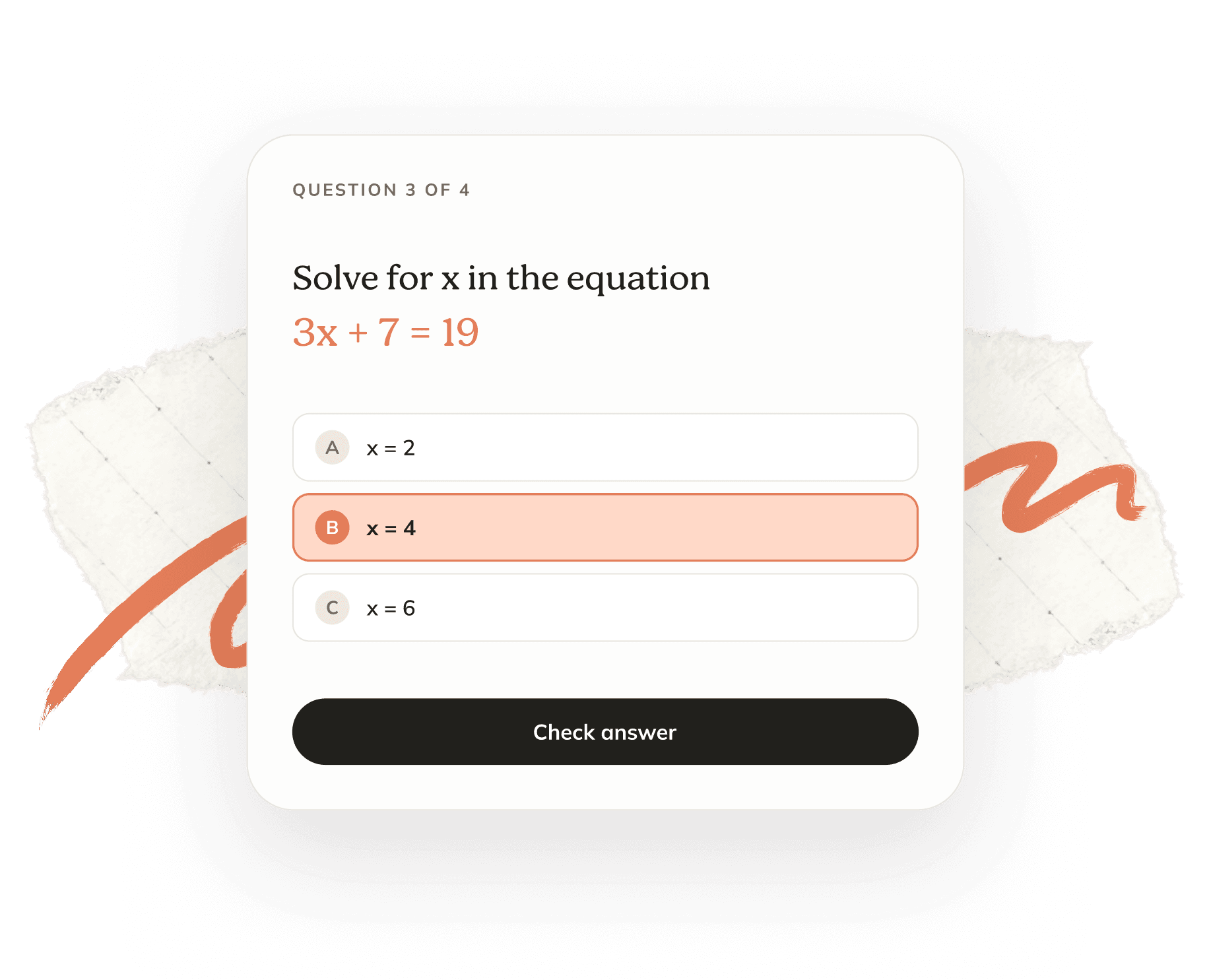
Get practice problems tailored to the exact topics you’re struggling with.
From middle-school math to AP exams to SAT/ACT prep. We also build custom plans matched to state standards and specific courses.
Revisit session summaries, session whiteboards, and uploads in one place.
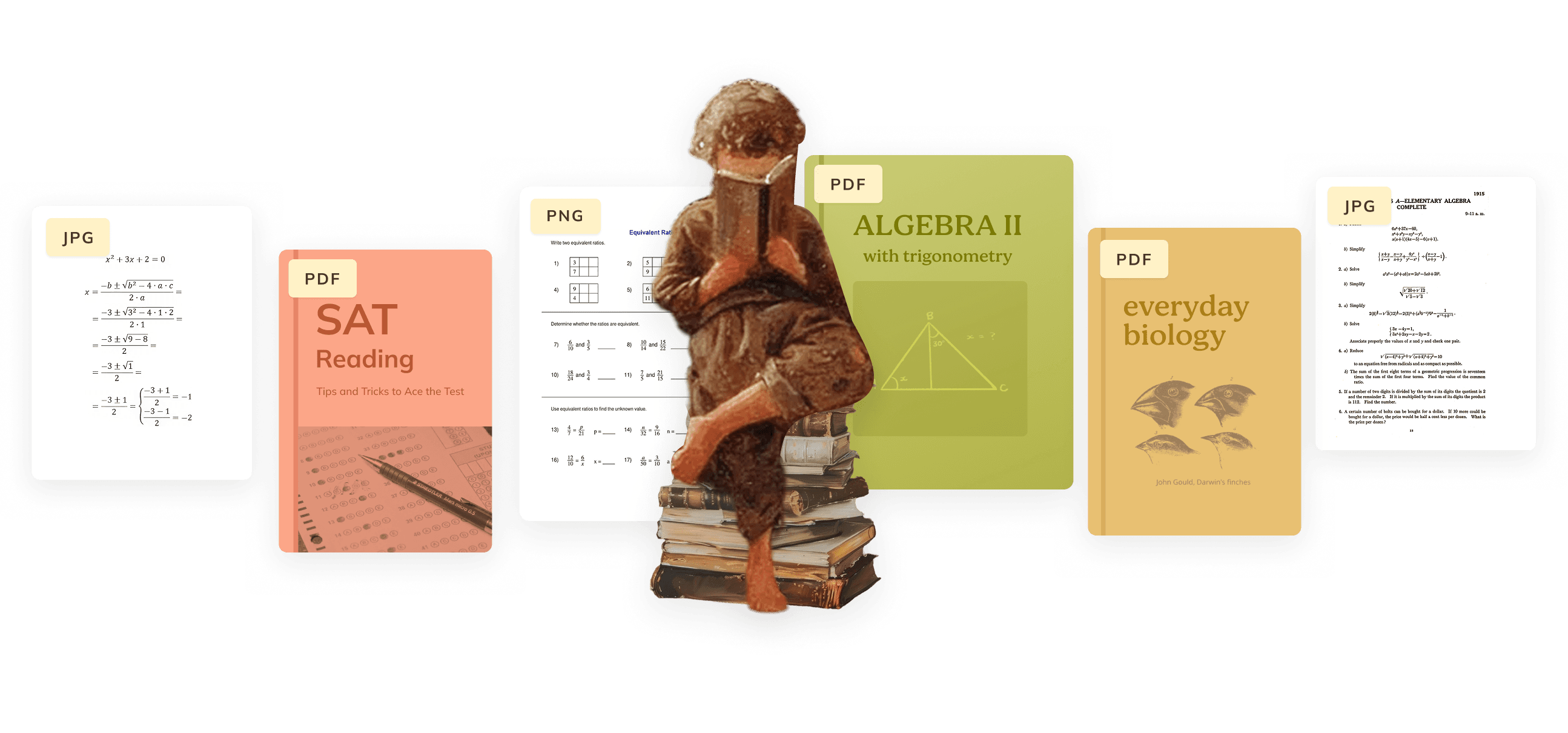
Aristotle can read and navigate any PDFs and images with the learner. That includes textbooks with hundreds of pages!
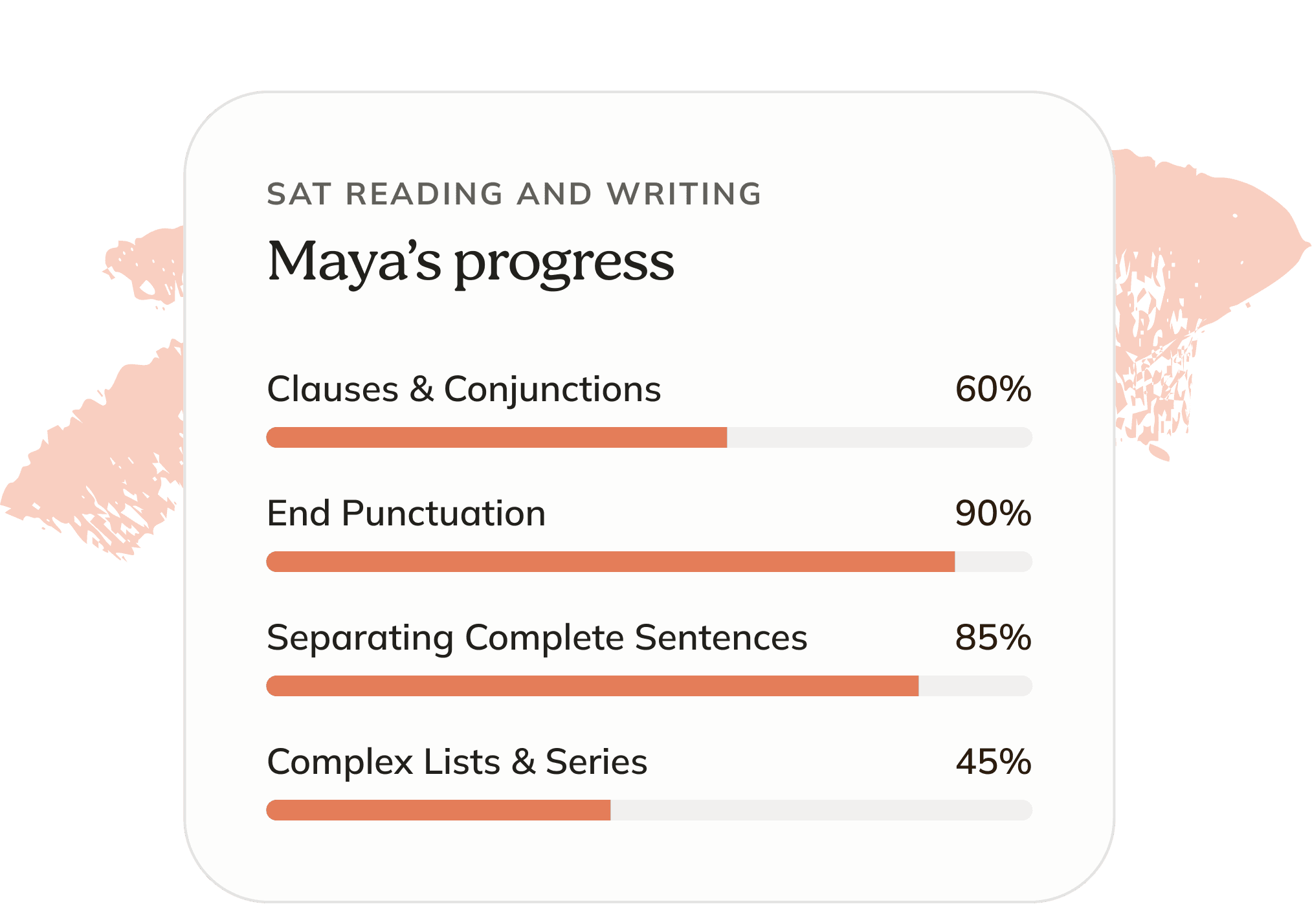
We break all subjects down into granular skills, then track mistakes and mastery on each one. Parents can see the whole picture at a glance.
Aristotle remembers every session: what you’ve covered, where you got stuck, how you like things explained. It picks up right where you left off.
The curriculum
Aristotle is designed to always know what to teach at exactly the right time.
Sample curriculum
+ 8 more math subjects available
* Click a topic to see the skills inside
Limits and Continuity
Differentiation: Definition and Fundamental Properties
Differentiation: Composite, Implicit, and Inverse Functions
Contextual Applications of Differentiation
Analytical Applications of Differentiation
Integration and Accumulation of Change
Differential Equations
Applications of Integration
AP Calculus AB tutoring curriculum142 skills across 8 units
Limits and Continuity
AP Calculus AB exam weighting: 10-12%. Topics: Introducing Calculus: Can Change Occur at an Instant?, Defining Limits and Using Limit Notation, Estimating Limit Values from Graphs, Estimating Limit Values from Tables, Determining Limits Using Algebraic Properties of Limits, Determining Limits Using Algebraic Manipulation, Selecting Procedures for Determining Limits, Determining Limits Using the Squeeze Theorem, Connecting Multiple Representations of Limits, Exploring Types of Discontinuities, Defining Continuity at a Point, Confirming Continuity over an Interval, Removing Discontinuities, Connecting Infinite Limits and Vertical Asymptotes, Connecting Limits at Infinity and Horizontal Asymptotes, Working with the Intermediate Value Theorem (IVT).
Differentiation: Definition and Fundamental Properties
AP Calculus AB exam weighting: 10-12%. Topics: Defining Average and Instantaneous Rates of Change at a Point, Defining the Derivative of a Function and Using Derivative Notation, Estimating Derivatives of a Function at a Point, Connecting Differentiability and Continuity: Determining When Derivatives Do and Do Not Exist, Applying the Power Rule, Derivative Rules: Constant, Sum, Difference, and Constant Multiple, Derivatives of cos x, sin x, ex, and ln x, The Product Rule, The Quotient Rule, Finding the Derivatives of Tangent, Cotangent, Secant, and/or Cosecant Functions.
Differentiation: Composite, Implicit, and Inverse Functions
AP Calculus AB exam weighting: 9-13%. Topics: The Chain Rule, Implicit Differentiation, Differentiating Inverse Functions, Differentiating Inverse Trigonometric Functions, Selecting Procedures for Calculating Derivatives, Calculating Higher - Order Derivatives.
Contextual Applications of Differentiation
AP Calculus AB exam weighting: 10-15%. Topics: Interpreting the Meaning of the Derivative in Context, Straight-Line Motion: Connecting Position, Velocity, and Acceleration, Rates of Change in Applied Contexts Other Than Motion, Introduction to Related Rates, Solving Related Rates Problems, Approximating Values of a Function Using Local Linearity and Linearization, Using L’Hospital’s Rule for Determining Limits of Indeterminate Forms.
Analytical Applications of Differentiation
AP Calculus AB exam weighting: 15-18%. Topics: Using the Mean Value Theorem, Extreme Value Theorem, Global Versus Local Extrema, and Critical Points, Determining Intervals on Which a Function Is Increasing or Decreasing, Using the First Derivative Test to Determine Relative (Local) Extrema, Using the Candidates Test to Determine Absolute (Global) Extrema, Determining Concavity of Functions over Their Domains, Using the Second Derivative Test to Determine Extrema, Sketching Graphs of Functions and Their Derivatives, Connecting a Function, Its First Derivative, and Its Second Derivative, Introduction to Optimization Problems, Solving Optimization Problems, Exploring Behaviors of Implicit Relations.
Integration and Accumulation of Change
AP Calculus AB exam weighting: 17-20%. Topics: Exploring Accumulationsof Change, Approximating Areas with Riemann Sums, Riemann Sums, Summation Notation, and Definite Integral Notation, The Fundamental Theorem of Calculus and Accumulation Functions, Interpreting the Behavior of Accumulation Functions Involving Area, Applying Properties of Definite Integrals, The Fundamental Theorem of Calculus and Definite Integrals, Finding Antiderivatives and Indefinite Integrals: Basic Rules and Notation, Integrating Using Substitution, Integrating Functions Using Long Division and Completing the Square, Selecting Techniques for Antidifferentiation.
Differential Equations
AP Calculus AB exam weighting: 6-12%. Topics: Modeling Situations with Differential Equations, Verifying Solutions for Differential Equations, Sketching Slope Fields, Reasoning Using Slope Fields, Finding General Solutions Using Separation of Variables, Finding Particular Solutions Using Initial Conditions and Separation of Variables, Exponential Models with Differential Equations.
Applications of Integration
AP Calculus AB exam weighting: 10-15%. Topics: Finding the Average Value of a Function on an Interval, Connecting Position, Velocity, and Acceleration of Functions Using Integrals, Using Accumulation Functions and Definite Integrals in Applied Contexts, Finding the Area Between Curves Expressed as Functions of x, Finding the Area Between Curves Expressed as Functions of y, Finding the Area Between Curves That Intersect at More Than Two Points, Volumes with Cross Sections: Squares and Rectangles, Volumes with Cross Sections: Triangles and Semicircles, Volume with Disc Method: Revolving Around the x- or y-Axis, Volume with Disc Method: Revolving Around Other Axes, Volume with Washer Method: Revolving Around the x- or y-Axis, Volume with Washer Method: Revolving Around Other Axes.
AP Calculus BC tutoring curriculum194 skills across 10 units
Limits and Continuity
AP Calculus BC exam weighting: 4-7%. Topics: Introducing Calculus: Can Change Occur at an Instant?, Defining Limits and Using Limit Notation, Estimating Limit Values from Graphs, Estimating Limit Values from Tables, Determining Limits Using Algebraic Properties of Limits, Determining Limits Using Algebraic Manipulation, Selecting Procedures for Determining Limits, Determining Limits Using the Squeeze Theorem, Connecting Multiple Representations of Limits, Exploring Types of Discontinuities, Defining Continuity at a Point, Confirming Continuity over an Interval, Removing Discontinuities, Connecting Infinite Limits and Vertical Asymptotes, Connecting Limits at Infinity and Horizontal Asymptotes, Working with the Intermediate Value Theorem (IVT).
Differentiation: Definition and Fundamental Properties
AP Calculus BC exam weighting: 4-7%. Topics: Defining Average and Instantaneous Rates of Change at a Point, Defining the Derivative of a Function and Using Derivative Notation, Estimating Derivatives of a Function at a Point, Connecting Differentiability and Continuity: Determining When Derivatives Do and Do Not Exist, Applying the Power Rule, Derivative Rules: Constant, Sum, Difference, and Constant Multiple, Derivatives of cos x, sin x, ex, and ln x, The Product Rule, The Quotient Rule, Finding the Derivatives of Tangent, Cotangent, Secant, and/or Cosecant Functions.
Differentiation: Composite, Implicit, and Inverse Functions
AP Calculus BC exam weighting: 4-7%. Topics: The Chain Rule, Implicit Differentiation, Differentiating Inverse Functions, Differentiating Inverse Trigonometric Functions, Selecting Procedures for Calculating Derivatives, Calculating Higher - Order Derivatives.
Contextual Applications of Differentiation
AP Calculus BC exam weighting: 6-9%. Topics: Interpreting the Meaning of the Derivative in Context, Straight-Line Motion: Connecting Position, Velocity, and Acceleration, Rates of Change in Applied Contexts Other Than Motion, Introduction to Related Rates, Solving Related Rates Problems, Approximating Values of a Function Using Local Linearity and Linearization, Using L’Hospital’s Rule for Determining Limits of Indeterminate Forms.
Analytical Applications of Differentiation
AP Calculus BC exam weighting: 8-11%. Topics: Using the Mean Value Theorem, Extreme Value Theorem, Global Versus Local Extrema, and Critical Points, Determining Intervals on Which a Function Is Increasing or Decreasing, Using the First Derivative Test to Determine Relative (Local) Extrema, Using the Candidates Test to Determine Absolute (Global) Extrema, Determining Concavity of Functions over Their Domains, Using the Second Derivative Test to Determine Extrema, Sketching Graphs of Functions and Their Derivatives, Connecting a Function, Its First Derivative, and Its Second Derivative, Introduction to Optimization Problems, Solving Optimization Problems, Exploring Behaviors of Implicit Relations.
Integration and Accumulation of Change
AP Calculus BC exam weighting: 17-20%. Topics: Exploring Accumulationsof Change, Approximating Areas with Riemann Sums, Riemann Sums, Summation Notation, and Definite Integral Notation, The Fundamental Theorem of Calculus and Accumulation Functions, Interpreting the Behavior of Accumulation Functions Involving Area, Applying Properties of Definite Integrals, The Fundamental Theorem of Calculus and Definite Integrals, Finding Antiderivatives and Indefinite Integrals: Basic Rules and Notation, Integrating Using Substitution, Integrating Functions Using Long Division and Completing the Square, Integrating Using Integration by Parts bc only, Integrating Using Linear Partial Fractions bc only, Evaluating Improper Integrals bc only, Selecting Techniques for Antidifferentiation.
Differential Equations
AP Calculus BC exam weighting: 6-9%. Topics: Modeling Situations with Differential Equations, Verifying Solutions for Differential Equations, Sketching Slope Fields, Reasoning Using Slope Fields, Approximating Solutions Using Euler’s Method bc only, Finding General Solutions Using Separation of Variables, Finding Particular Solutions Using Initial Conditions and Separation of Variables, Exponential Models with Differential Equations, Logistic Models with Differential Equations bc only.
Applications of Integration
AP Calculus BC exam weighting: 6-9%. Topics: Finding the Average Value of a Function on an Interval, Connecting Position, Velocity, and Acceleration of Functions Using Integrals, Using Accumulation Functions and Definite Integrals in Applied Contexts, Finding the Area Between Curves Expressed as Functions of x, Finding the Area Between Curves Expressed as Functions of y, Finding the Area Between Curves That Intersect at More Than Two Points, Volumes with Cross Sections: Squares and Rectangles, Volumes with Cross Sections: Triangles and Semicircles, Volume with Disc Method: Revolving Around the x- or y-Axis, Volume with Disc Method: Revolving Around Other Axes, Volume with Washer Method: Revolving Around the x- or y-Axis, Volume with Washer Method: Revolving Around Other Axes, The Arc Length of a Smooth, Planar Curve and Distance Traveled bc only.
Parametric Equations, Polar Coordinates, and Vector-Valued Functions
AP Calculus BC exam weighting: 11-12%. Topics: Defining and Differentiating Parametric Equations, Second Derivatives of Parametric Equations, Finding Arc Lengths of Curves Given by Parametric Equations, Defining and Differentiating Vector-Valued Functions, Integrating Vector-Valued Functions, Solving Motion Problems Using Parametric and Vector-Valued Functions, Defining Polar Coordinates and Differentiating in Polar Form, Find the Area of a Polar Region or the Area Bounded by a Single Polar Curve, Finding the Area of the Region Bounded by Two Polar Curves.
Infinite Sequences and Series
AP Calculus BC exam weighting: 17-18%. Topics: Defining Convergent and Divergent Infinite Series, Working with Geometric Series, The nth Term Test for Divergence, Integral Test for Convergence, Harmonic Series and p-Series, Comparison Tests for Convergence, Alternating Series Test for Convergence, Ratio Test for Convergence, Determining Absolute or Conditional Convergence, Alternating Series Error Bound, Finding Taylor Polynomial Approximations of Functions, Lagrange Error Bound, Radius and Interval of Convergence of Power Series, Finding Taylor or Maclaurin Series for a Function, Representing Functions as Power Series.
My son told me yesterday that we should cancel his human tutor, because Aristotle is doing a better job. The human tutor was $250/hour.

A few things you might wonder before getting started.
The full first-year calculus sequence, tracked as 336 individual skills: limits and continuity, derivatives and their applications, integrals and accumulation, differential equations, and infinite series. The curriculum is built on the AP Calculus AB and BC frameworks, which cover the same material as high school calculus classes and college Calculus I and II, so it fits whichever version of the course your student is taking.
Check out our most recent blog posts.

This could be you
For homework, supporting your child, or anything you’ve always wanted to know more about, Aristotle makes it easy for anyone to learn out loud.