A complete first course
The map covers the common first-course variants, geometry-first and computation-first alike, from vectors and elimination through eigenvalues and the SVD.

College
Pioneered by Stanford AI researchers and learning scientists, Aristotle is the world's first voice-based AI linear algebra tutor. From vectors and elimination through eigenvalues and the SVD, Aristotle has improved thousands of grades over 22% within a week.
Trusted by families at
















Fits your linear algebra course
The map covers the common first-course variants, geometry-first and computation-first alike, from vectors and elimination through eigenvalues and the SVD.
Share the syllabus, textbook, or this week's problem set and sessions follow your class, in the order your professor teaches it.
Rescuing a grade before the final, placing out of a requirement, or building the math for machine learning? Aristotle builds the path backwards from your goal.
Features
Talk things through, work side by side, and come back next time to a tutor who remembers where you left off.
Ask questions out loud, hear explanations in Aristotle’s voice, and interrupt whenever you need to.
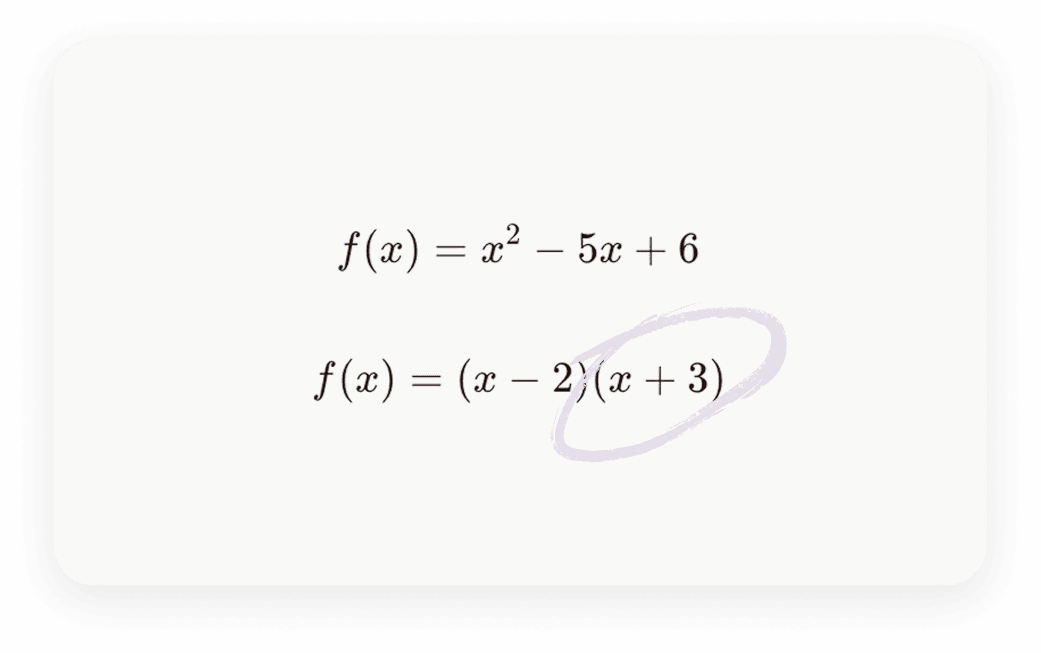
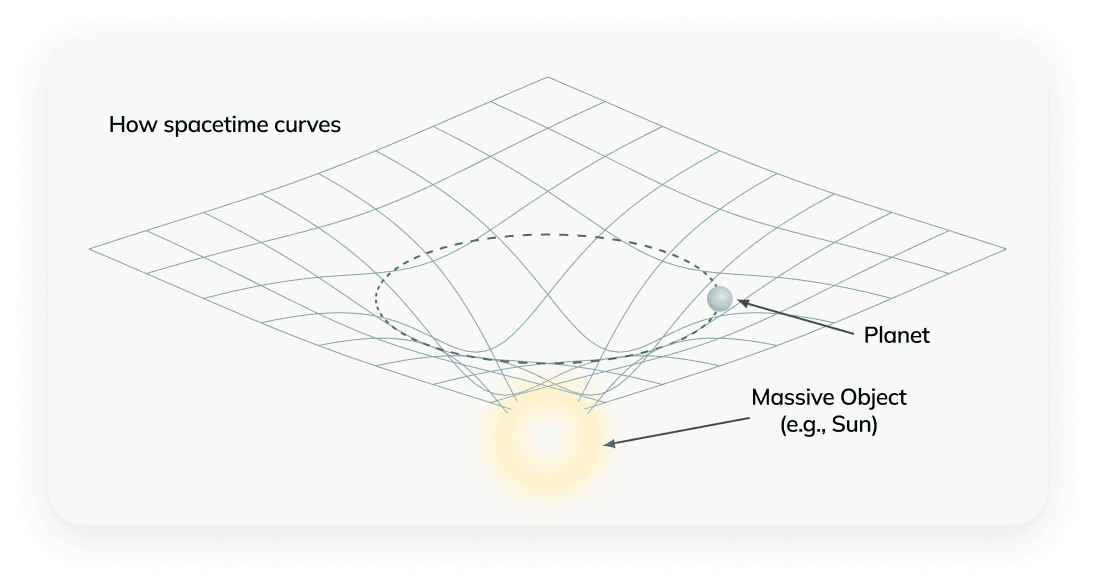
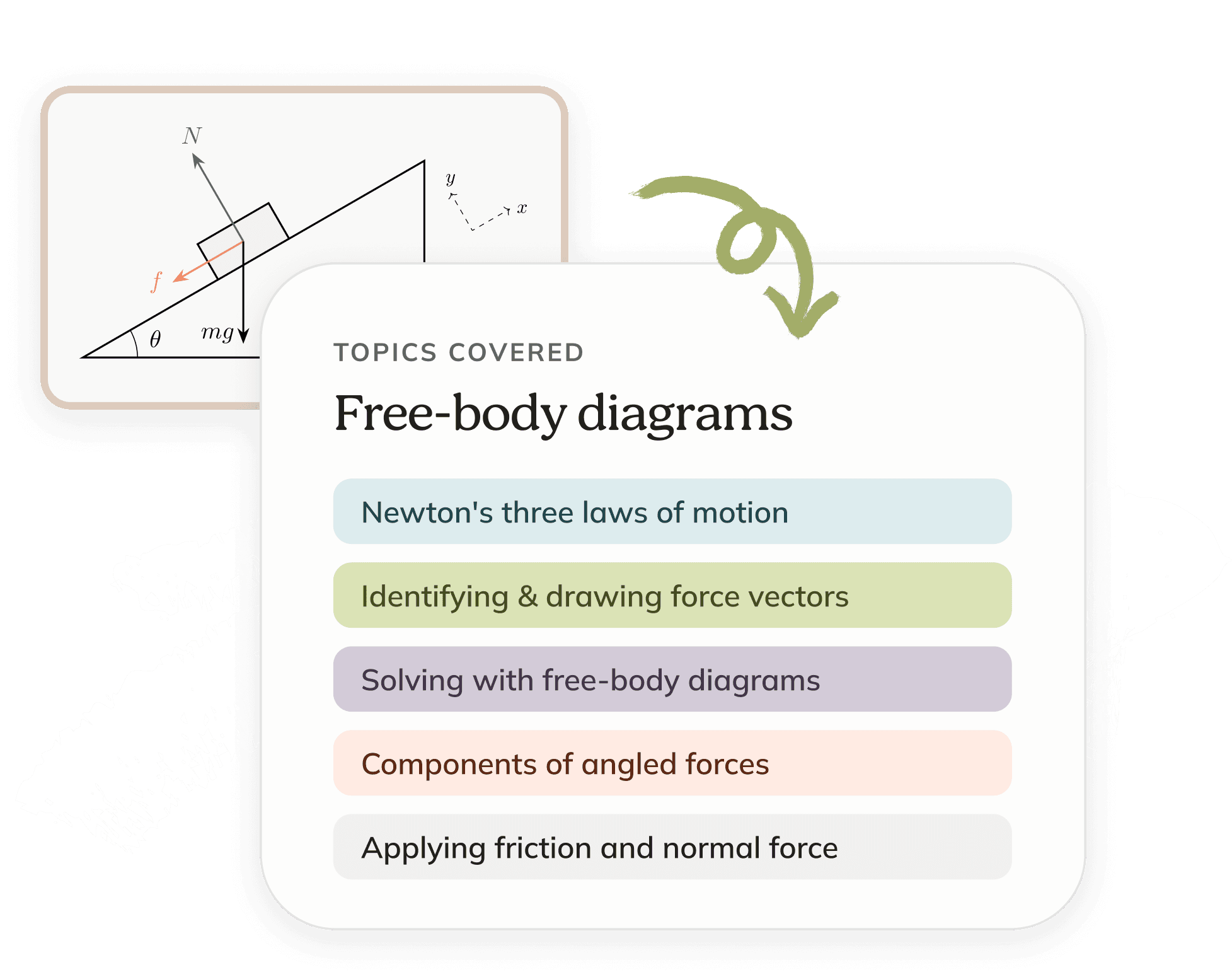
Aristotle draws steps, diagrams, and images to help you learn visually.
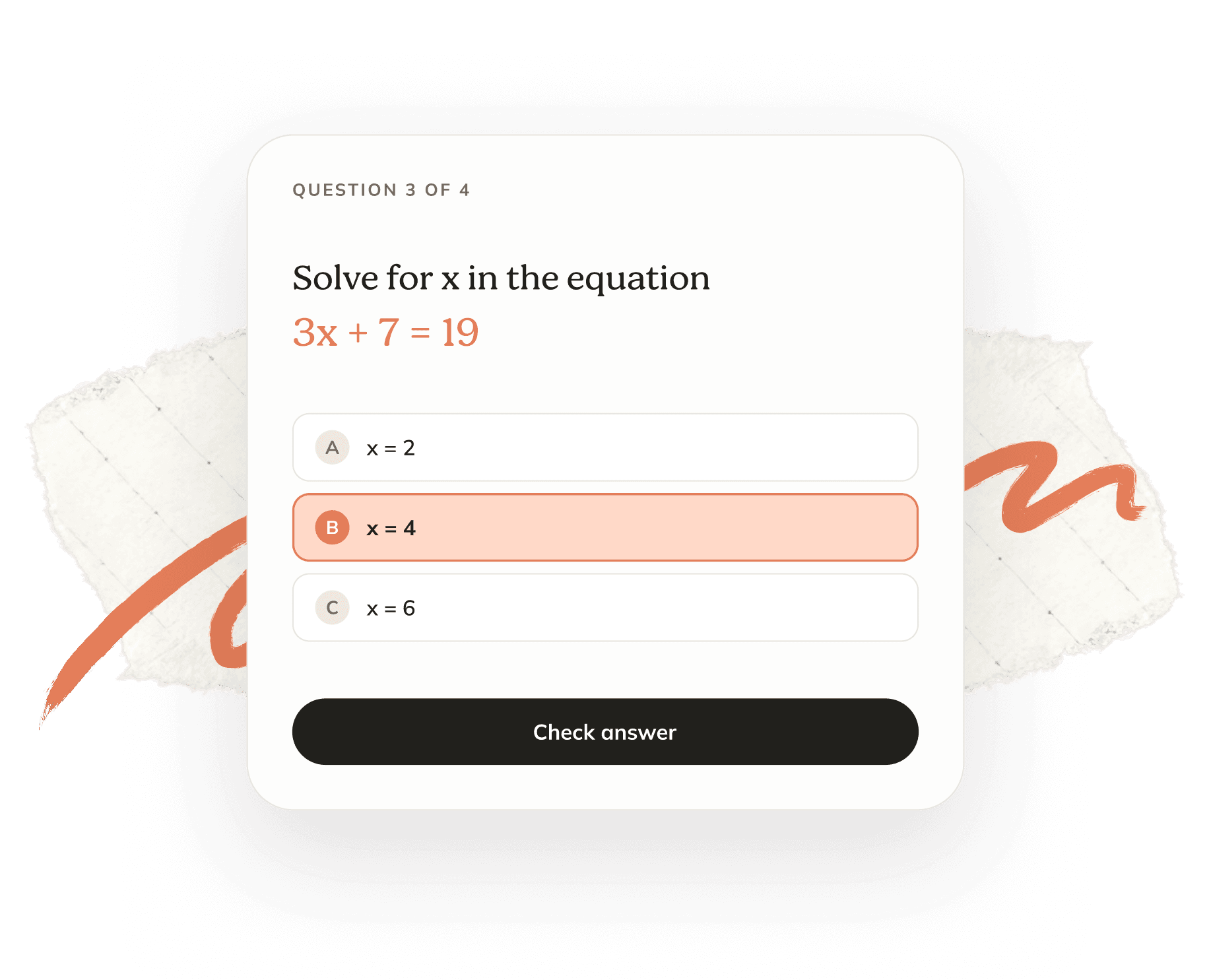
Get practice problems tailored to the exact topics you’re struggling with.
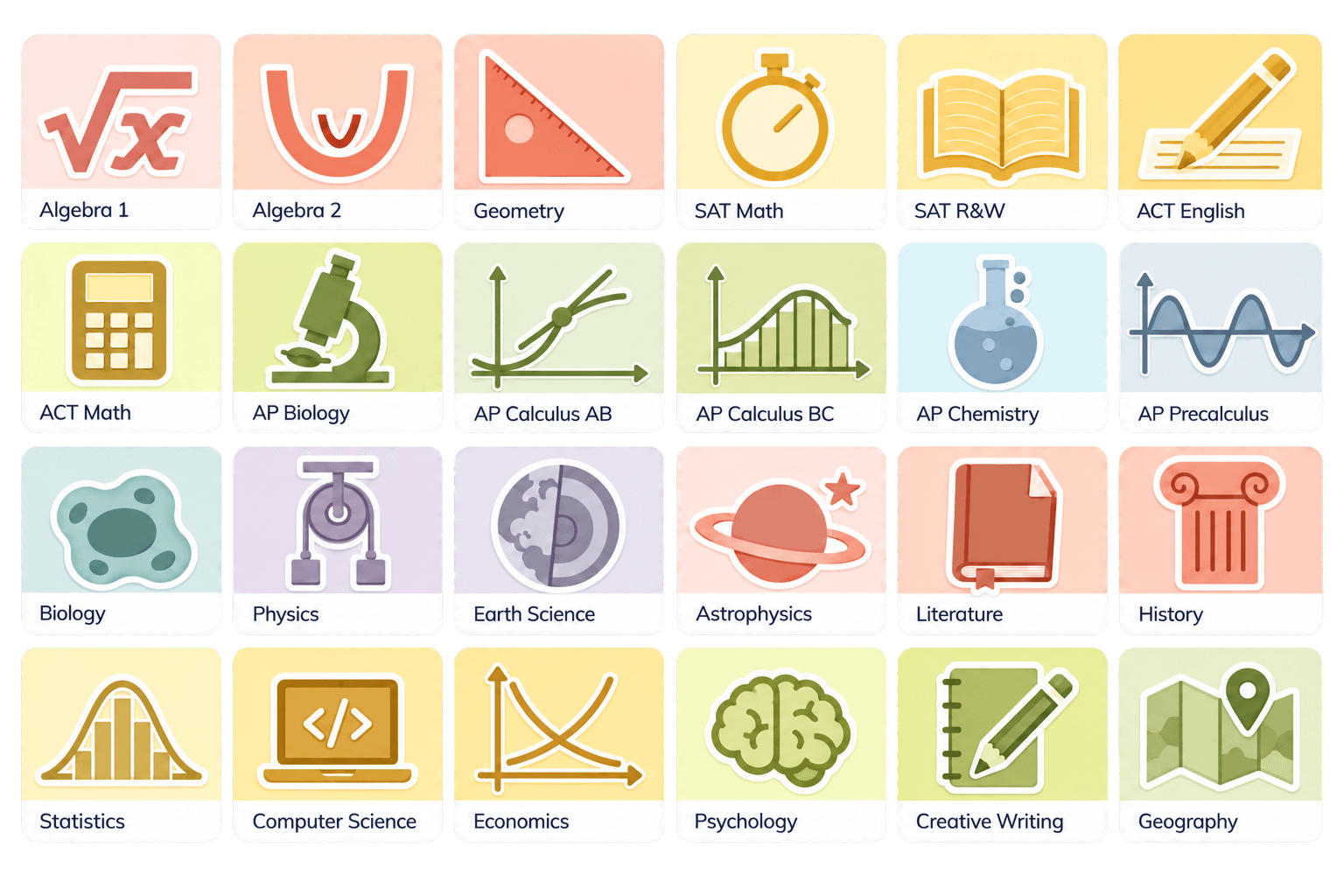
From middle-school math to AP exams to SAT/ACT prep. We also build custom plans matched to state standards and specific courses.
Revisit session summaries, session whiteboards, and uploads in one place.
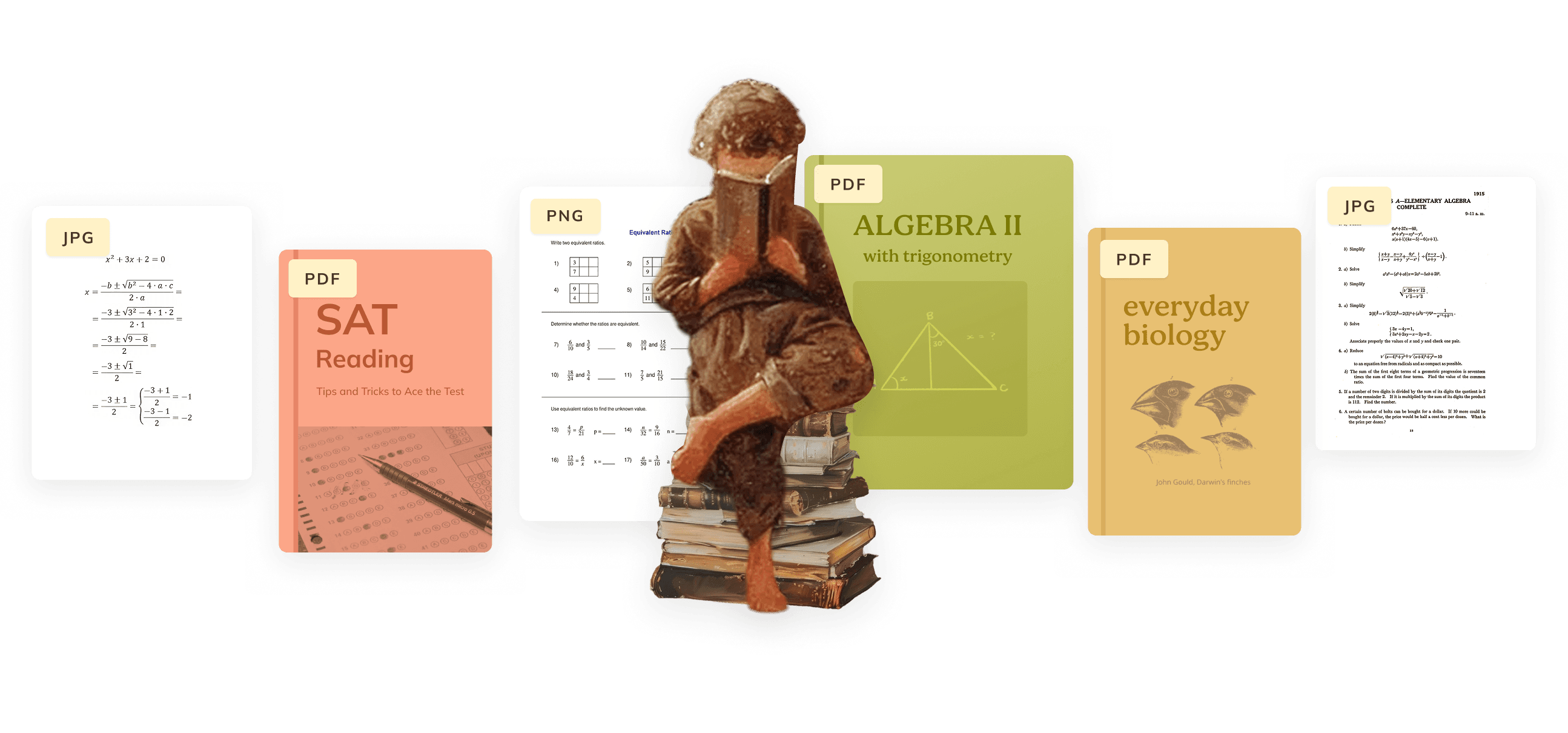
Aristotle can read and navigate any PDFs and images with the learner. That includes textbooks with hundreds of pages!
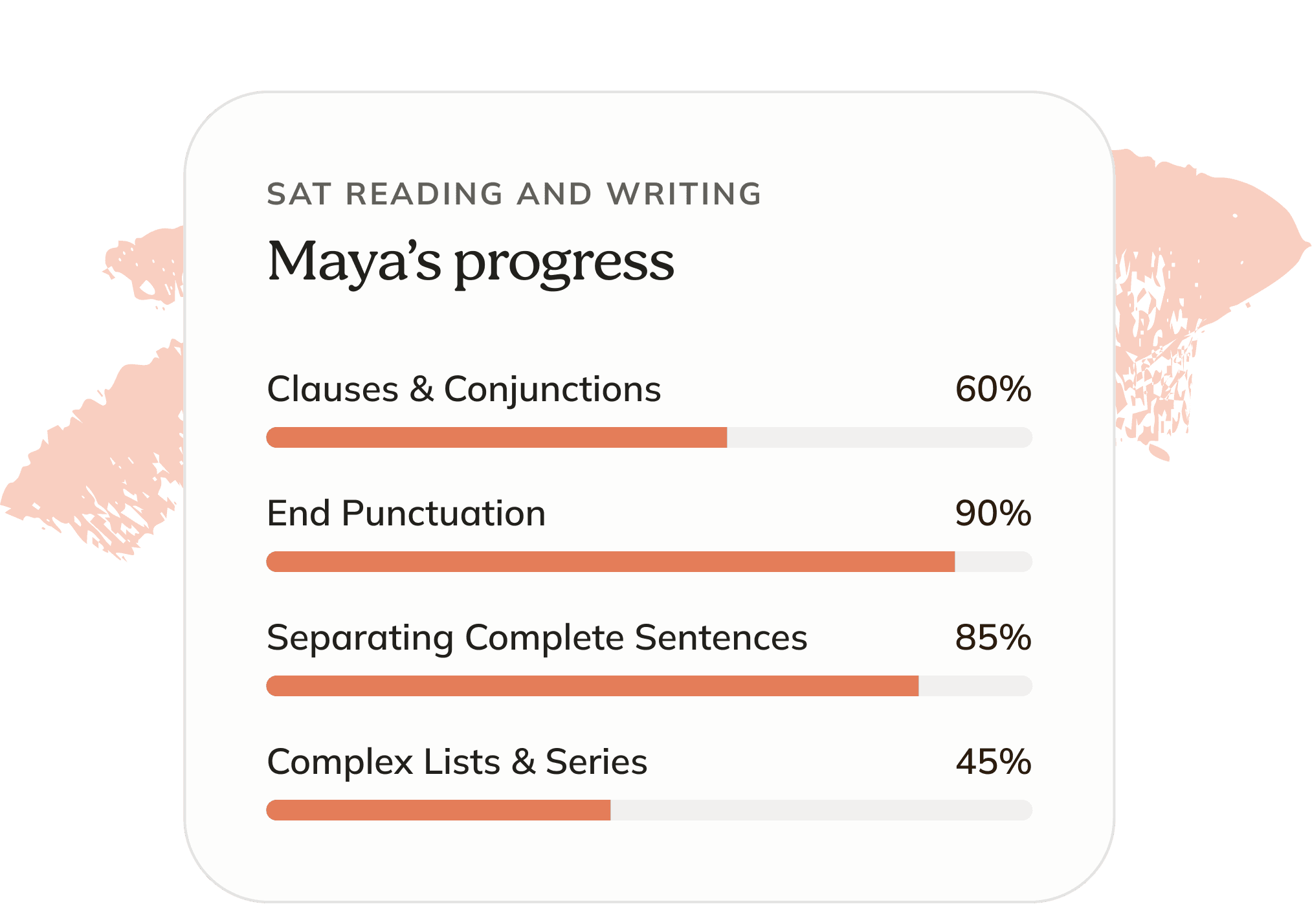
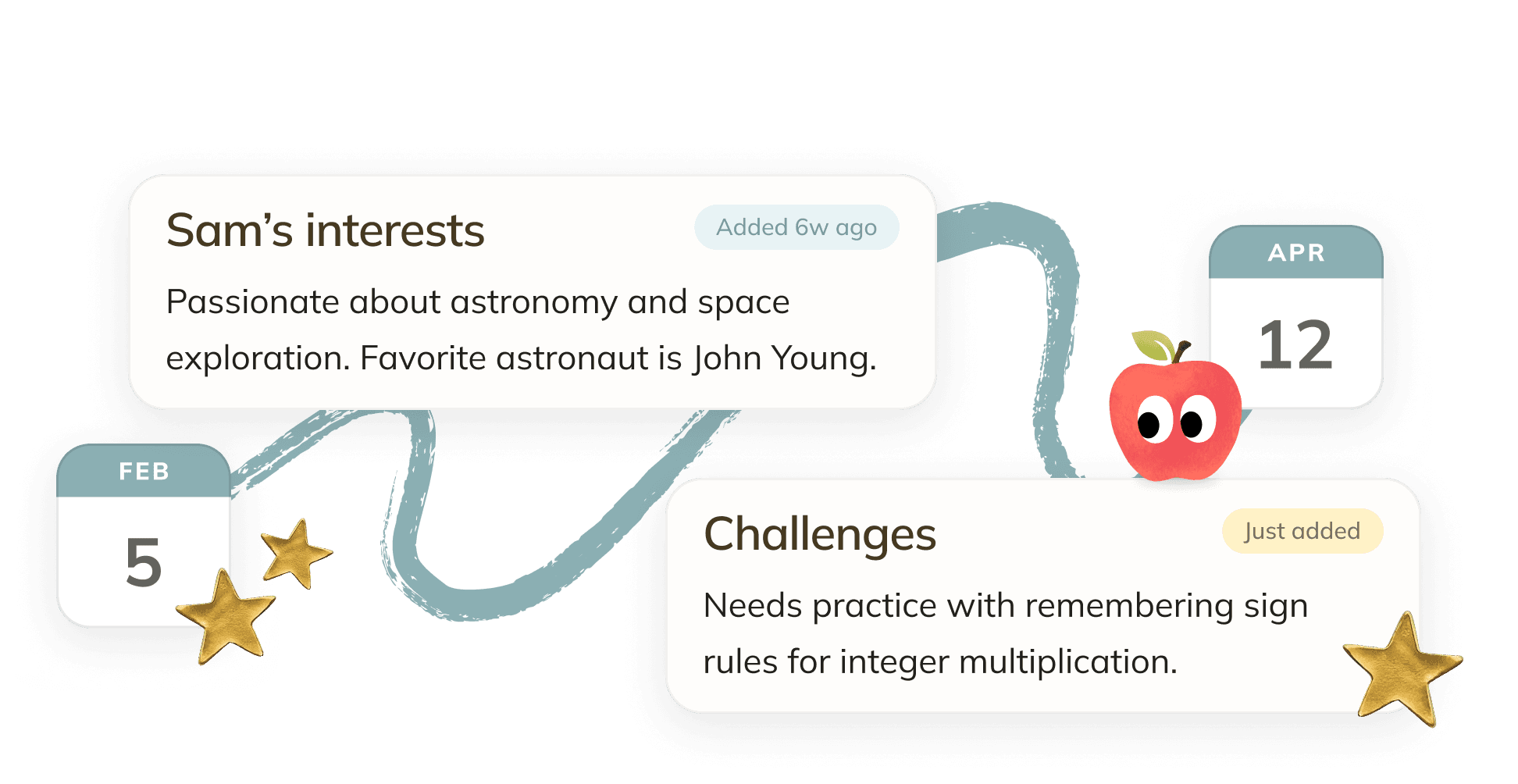
We break all subjects down into granular skills, then track mistakes and mastery on each one. Parents can see the whole picture at a glance.
Aristotle remembers every session: what you’ve covered, where you got stuck, how you like things explained. It picks up right where you left off.
The curriculum
Aristotle is designed to always know what to teach at exactly the right time.
Sample curriculum
+ 9 more math subjects available
* Click a topic to see the skills inside
Vectors and Linear Combinations
Linear Systems and Elimination
Matrix Algebra and Inverses
Vector Spaces, Independence, and Basis
The Four Fundamental Subspaces and Rank
Linear Transformations
Orthogonality and Projection
Least Squares, Gram-Schmidt, and QR
Determinants
Eigenvalues, Eigenvectors, and Diagonalization
Symmetric Matrices and the Spectral Theorem
The Singular Value Decomposition
Linear Algebra tutoring curriculum141 skills across 12 units
Vectors and Linear Combinations
Vectors in Rn, scalar multiples, linear combinations, span, the dot product, length and angle, and the column picture of a system. Topics: Vectors and Vector Operations, Linear Combinations and Span, Dot Product, Length, and Angle.
Linear Systems and Elimination
Gaussian elimination, row reduction to RREF, pivots and free variables, the row and column pictures, consistency of Ax=b, and the complete solution. Topics: Geometry of Linear Systems, Gaussian Elimination, Reduced Row Echelon Form, Complete Solution of Ax=b.
Matrix Algebra and Inverses
Matrix arithmetic and multiplication, transpose, the inverse and the invertible-matrix theorem, elimination as matrix multiplication, the A=LU factorization, and permutations. Topics: Matrix Operations, Transpose and Special Matrices, Matrix Inverses, Elimination Matrices and A=LU.
Vector Spaces, Independence, and Basis
Subspaces of Rn, spanning sets, linear independence, basis, dimension, and coordinates, the framework for describing the space a set of vectors generates and measuring its size. Topics: Subspaces of Rn, Linear Independence, Basis, Dimension, and Coordinates, General Vector Spaces (Extension).
The Four Fundamental Subspaces and Rank
Column space, null space, row space, and left null space; rank; the rank-nullity theorem; and the big picture relating Ax=b solvability and Ax=0. Topics: Column Space and Null Space, Row Space and Left Null Space, Rank and the Big Picture.
Linear Transformations
Transformations as matrices, the geometry of common transformations, kernel and image, the matrix of a transformation in chosen bases, and change of basis. Topics: Linear Transformations and Their Matrices, Geometry of Transformations, Kernel and Image, Change of Basis.
Orthogonality and Projection
Orthogonal and orthonormal sets, orthogonal complements, the orthogonality of the four fundamental subspaces, and projection of a vector onto a line or subspace. Topics: Orthogonal and Orthonormal Sets, Orthogonal Complements, Projection onto Subspaces.
Least Squares, Gram-Schmidt, and QR
The normal equations, least-squares fitting and regression, the Gram-Schmidt process, and the A=QR factorization. Topics: Normal Equations and Least Squares, Least-Squares Fitting (Application), Gram-Schmidt and QR.
Determinants
Cofactor expansion, the defining properties, the geometric area/volume meaning, Cramer's rule, and the determinant's role in the characteristic equation. Topics: Computing Determinants, Properties of Determinants, Geometry and Applications of Determinants.
Eigenvalues, Eigenvectors, and Diagonalization
The characteristic equation, eigenspaces, diagonalization, complex eigenvalues, powers of a matrix, and Markov matrices as an application. Topics: Eigenvalues and Eigenvectors, Diagonalization, Complex Eigenvalues, Markov Matrices (Application).
Symmetric Matrices and the Spectral Theorem
Orthogonal diagonalization S = Q Lambda Q-transpose, quadratic forms, and positive-definite matrices. Topics: The Spectral Theorem, Quadratic Forms, Positive-Definite Matrices.
The Singular Value Decomposition
The factorization A = U Sigma V-transpose, its geometry, low-rank approximation, and brief modern applications such as PCA and PageRank. Topics: Computing the SVD, Geometry and Subspaces of the SVD, Low-Rank Approximation and Applications.
My son told me yesterday that we should cancel his human tutor, because Aristotle is doing a better job. The human tutor was $250/hour.

A few things you might wonder before getting started.
Aristotle covers a complete first course in linear algebra: 141 individually tracked skills across 41 topics. That includes vectors and linear combinations, linear systems and elimination, matrix algebra and inverses, vector spaces and bases, the four fundamental subspaces, linear transformations, orthogonality and projection, least squares, determinants, eigenvalues and diagonalization, symmetric matrices, and the singular value decomposition.
Check out our most recent blog posts.
This could be you
For homework, supporting your child, or anything you’ve always wanted to know more about, Aristotle makes it easy for anyone to learn out loud.