State standards
Every Algebra 1 and Algebra 2 skill is aligned to Common Core standards, so tutoring matches what your child is graded on at school.

Grades 8–12
Pioneered by Stanford AI researchers and learning scientists, Aristotle is the world's first voice-based AI algebra tutor. From Algebra 1 foundations through Algebra 2, Aristotle has improved thousands of grades over 22% within a week.
Trusted by families at












Fits your child's algebra class
Every Algebra 1 and Algebra 2 skill is aligned to Common Core standards, so tutoring matches what your child is graded on at school.
Share the syllabus or textbook and sessions follow your child's actual class, whether that's public, private, or homeschool.
Working toward a placement exam, catching up after a rough semester, or getting a grade up? Aristotle builds the path backwards from your goal.
Features
Talk things through, work side by side, and come back next time to a tutor who remembers where you left off.
Ask questions out loud, hear explanations in Aristotle’s voice, and interrupt whenever you need to.
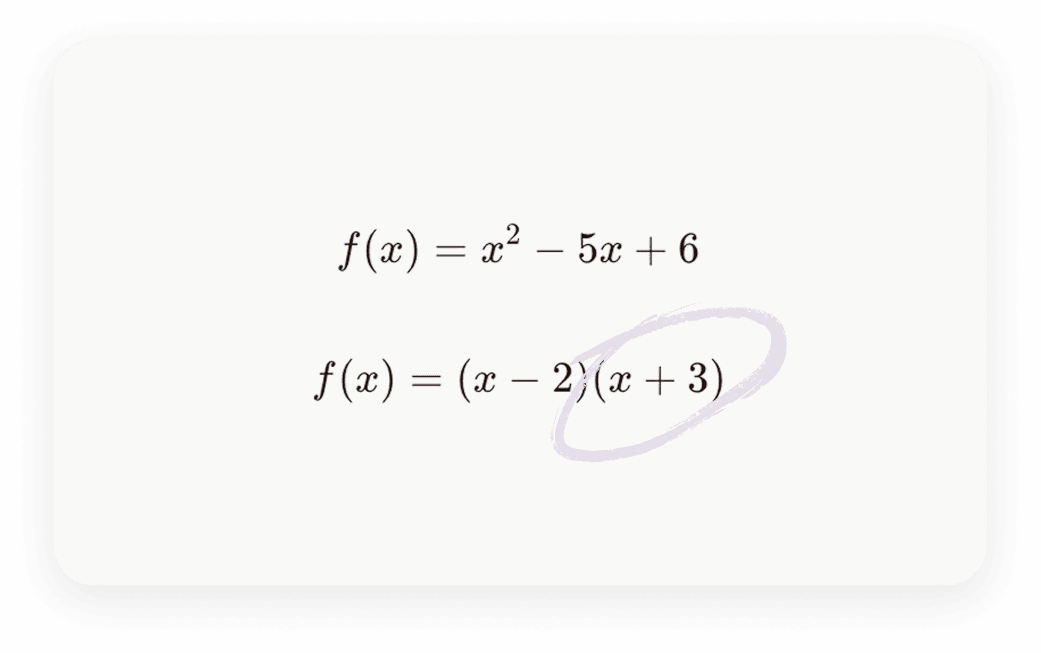
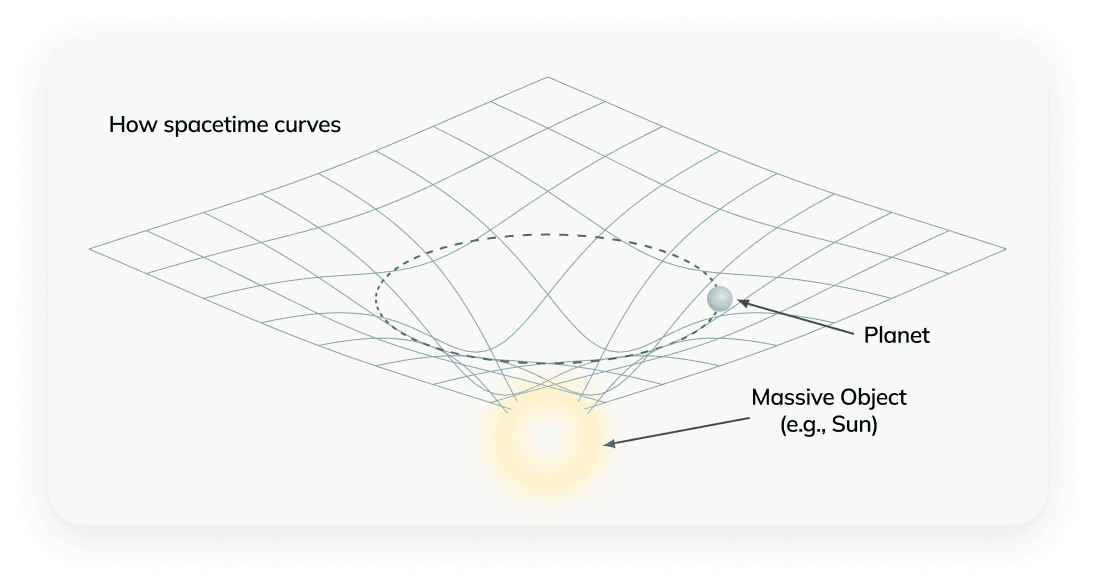
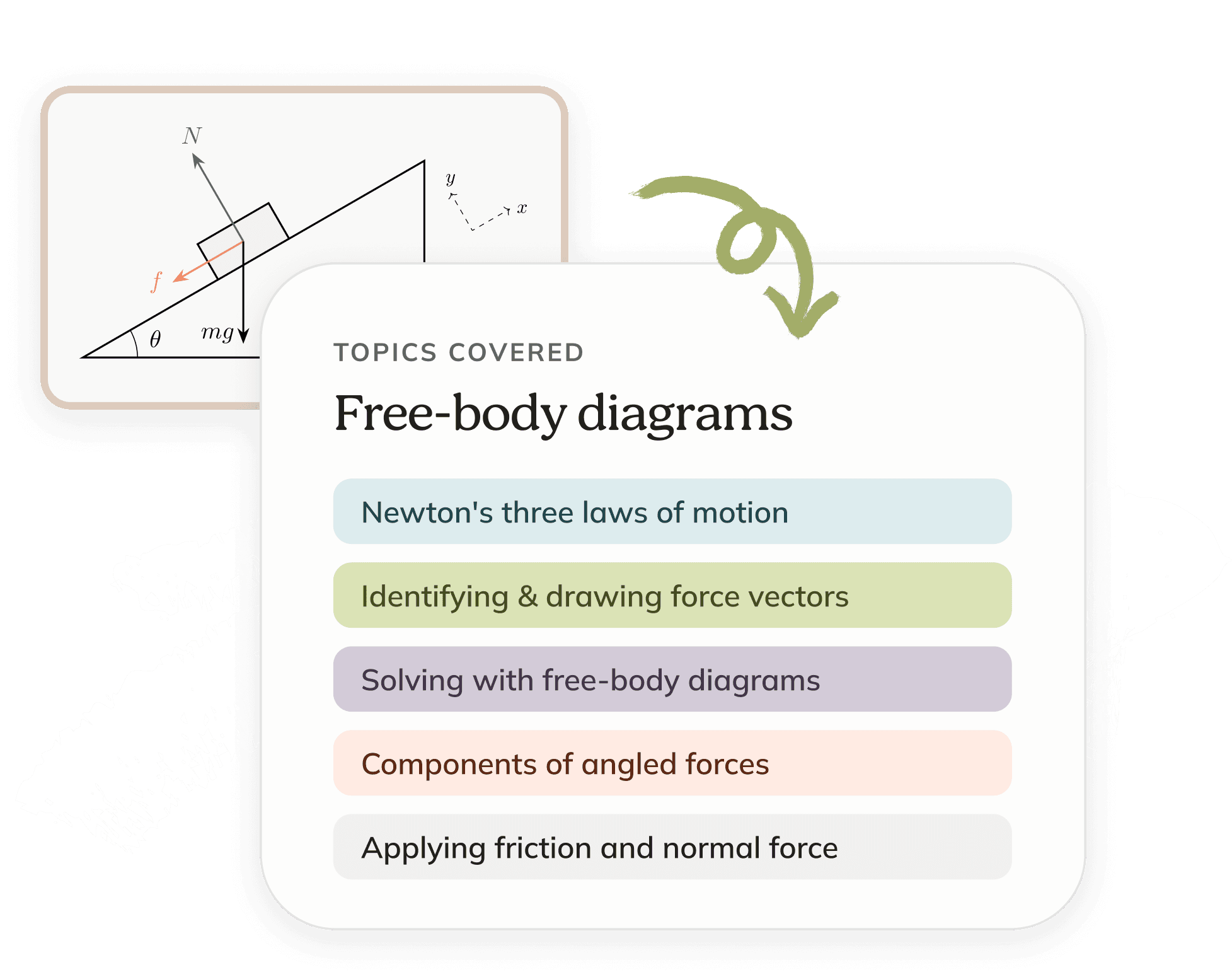
Aristotle draws steps, diagrams, and images to help you learn visually.
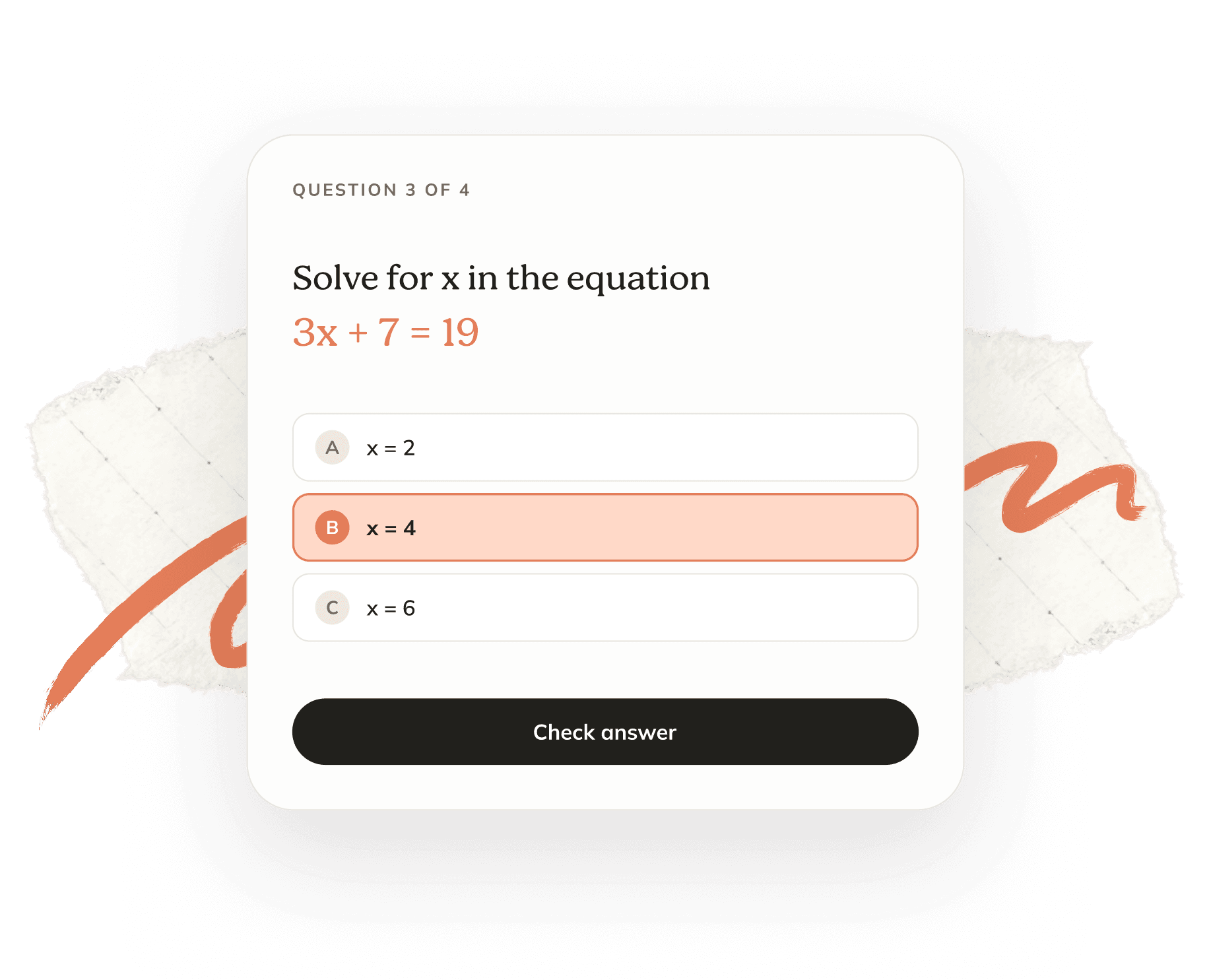
Get practice problems tailored to the exact topics you’re struggling with.
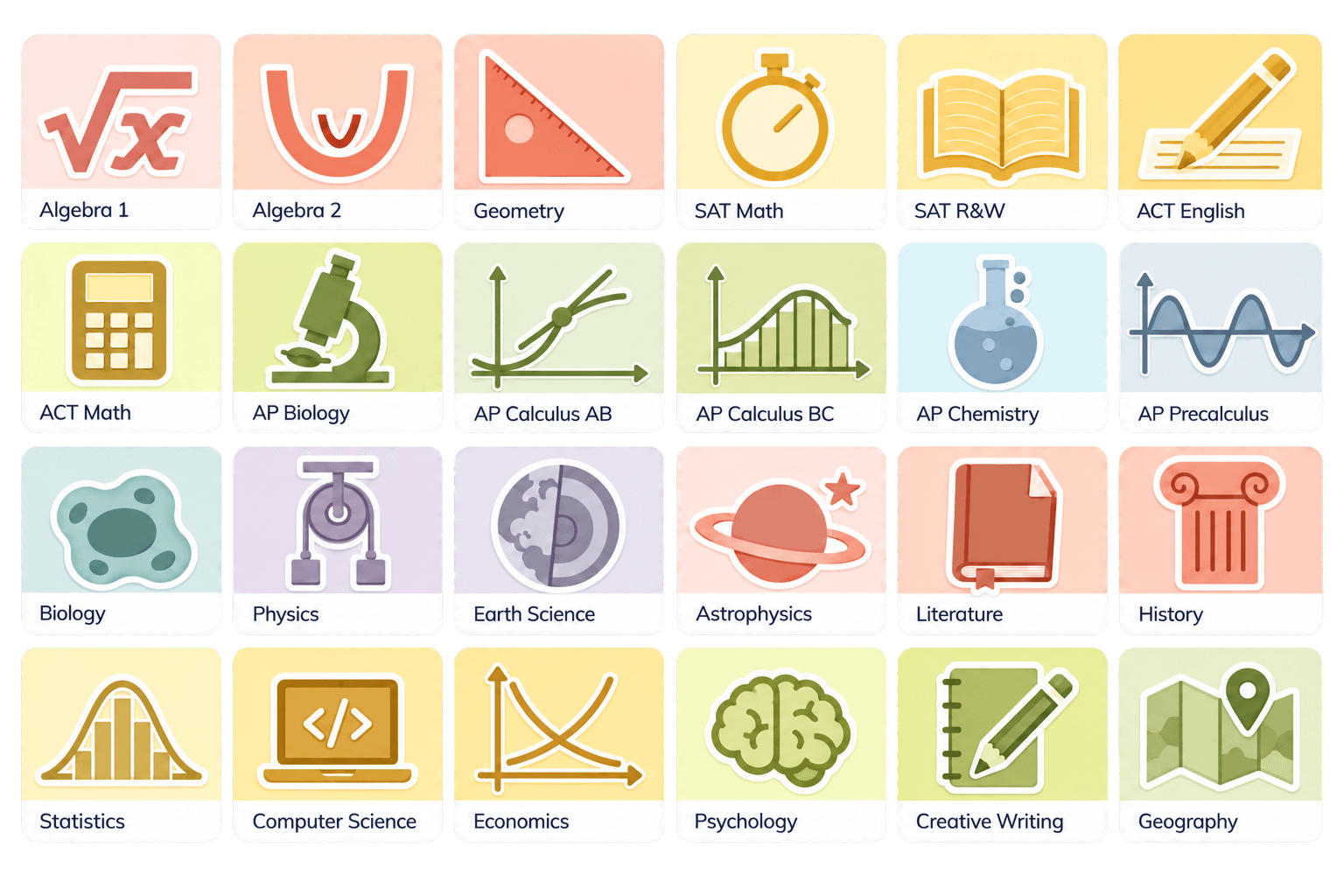
From middle-school math to AP exams to SAT/ACT prep. We also build custom plans matched to state standards and specific courses.
Revisit session summaries, session whiteboards, and uploads in one place.
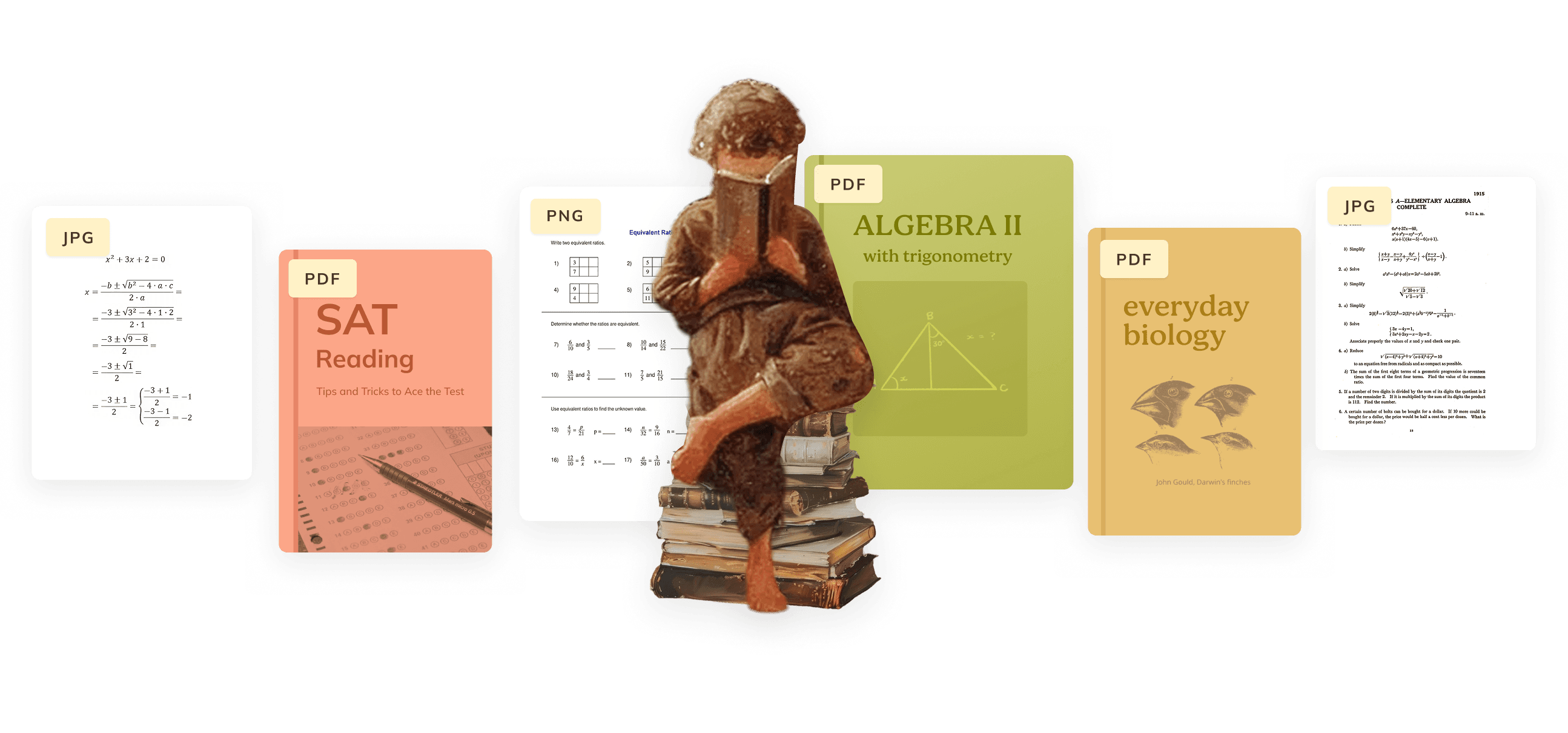
Aristotle can read and navigate any PDFs and images with the learner. That includes textbooks with hundreds of pages!
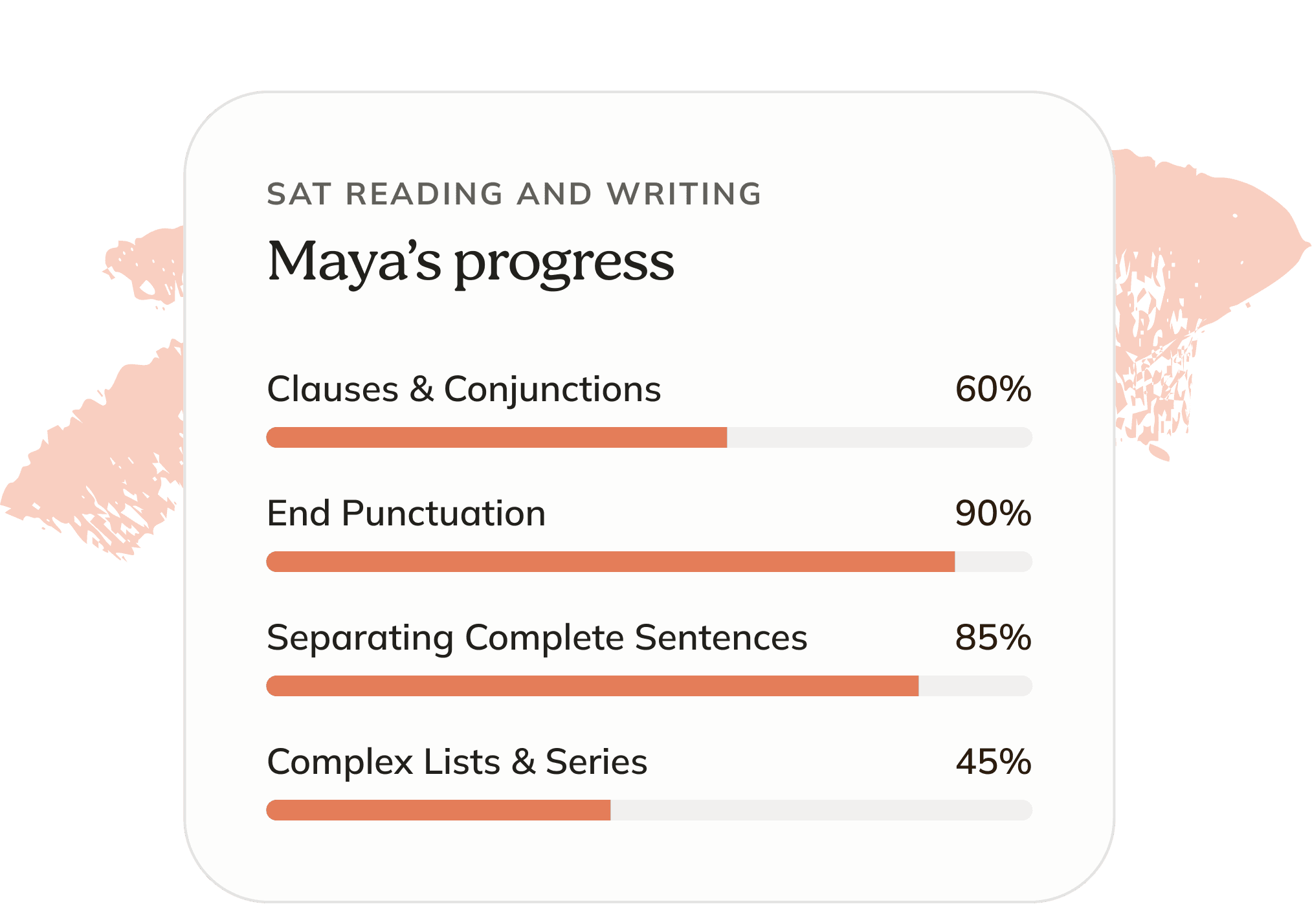
We break all subjects down into granular skills, then track mistakes and mastery on each one. Parents can see the whole picture at a glance.
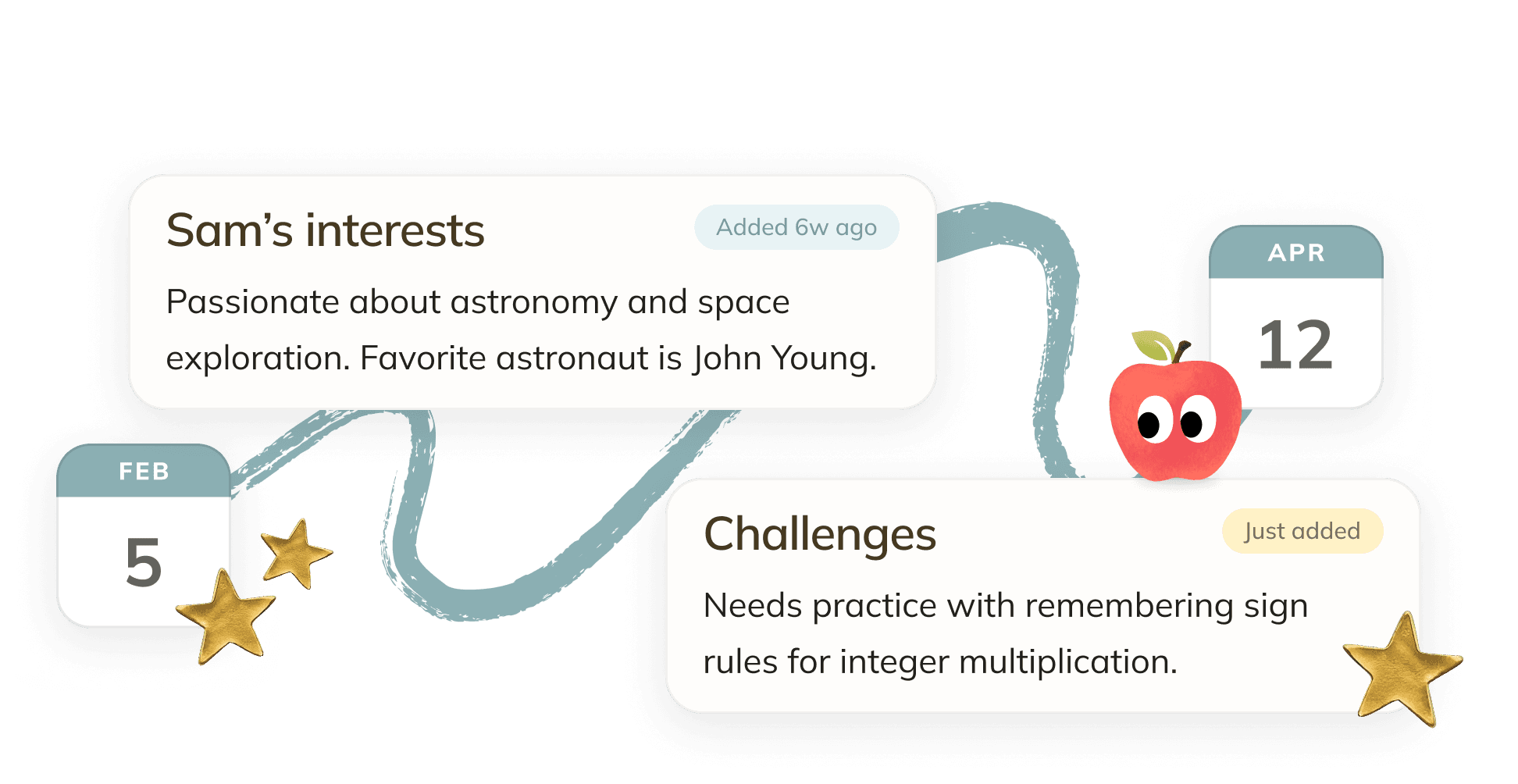
Aristotle remembers every session: what you’ve covered, where you got stuck, how you like things explained. It picks up right where you left off.
The curriculum
Aristotle is designed to always know what to teach at exactly the right time.
Sample curriculum
+ 8 more math subjects available
* Click a topic to see the skills inside
Foundations for Algebra 1
Linear Equations
Linear Inequalities
Linear Functions
Statistics and Data Modeling
Linear Systems
Functions
Exponents and Radicals
Exponential Functions
Polynomials and Factoring
Quadratic Functions
Quadratic Equations
Algebra 1 tutoring curriculum372 skills across 12 units
Foundations for Algebra 1
Lean Algebra 1 on-ramp centered on algebraic expression language, expression evaluation, equivalent linear expressions, high-leverage arithmetic diagnostics, and unit reasoning. Topics: Algebraic Expression Language, Evaluating Expressions, Equivalent Linear Expressions, Algebra Readiness Arithmetic, Units and Dimensional Analysis.
Linear Equations
Solving linear equations in one variable: one- and two-step equations, multi-step solving past structural obstacles, literal-equation rearrangement, modeling contexts with a single equation, and absolute value equations. Topics: One-Step and Two-Step Equations, Multi-Step Linear Equations, Literal Equations and Formulas, Equation Modeling, Absolute Value Equations.
Linear Inequalities
Solving and graphing linear inequalities in one variable: one-step through multi-step solving with symbol reversal, compound inequalities and interval notation, modeling contexts with inequalities, and absolute value inequalities. Topics: Solving One-Variable Inequalities, Compound Inequalities and Interval Notation, Inequality Modeling, Absolute Value Inequalities.
Linear Functions
Linear relationships represented as functions, graphs, tables, rates of change, intercepts, proportional relationships, line-equation forms, and arithmetic sequences. Topics: Coordinate Plane and Graph Reading, Identifying Linear Relationships, Proportional Relationships and Unit Rates, Slope and Rate of Change, Intercepts, Forms of Linear Equations, Special Lines and Line Families, Arithmetic Sequences, Linear Modeling.
Statistics and Data Modeling
Statistics and data modeling: one-variable data, categorical data in two-way tables, scatter plots, trend lines, residuals, correlation, causation, sampling, measurement precision, and probability. Topics: One-Variable Data, Two-Way Tables and Categorical Data, Scatter Plots and Trend Lines, Residuals, Correlation, and Causation, Sampling, Bias, and Measurement Precision, Probability.
Linear Systems
Systems of linear equations and inequalities: graphing, substitution, elimination, special solution cases, modeling with multiple constraints, and feasible regions. Topics: Systems by Graphing, Solving by Substitution, Solving by Elimination, Special Systems, System Modeling, Two-Variable Linear Inequalities, Systems of Inequalities and Feasible Regions.
Functions
General function ideas used across Algebra 1: inputs and outputs, function notation, domain and range, graph features, sequences, inverse relationships, and connections among representations. Topics: Relations and Functions, Function Notation, Domain and Range, Interpreting Function Graphs, Sequences and Recursive Rules, Piecewise Functions, Absolute Value Functions, Inverse Functions.
Exponents and Radicals
Reusable algebraic fluency with powers, roots, scientific notation, radicals, rational exponents, and real-number structure that supports polynomial, exponential, and quadratic work. Topics: Zero and Negative Exponents, Exponent Rules, Scientific Notation, Square and Cube Roots, Rational and Irrational Numbers, Simplifying Radicals, Rational Exponents.
Exponential Functions
Exponential relationships represented as functions, tables, graphs, growth and decay models, and geometric sequences. Topics: Exponential Functions and Graphs, Exponential Growth and Decay, Geometric Sequences, Exponential Modeling, Simple Exponential Equations, Linear versus Exponential Change.
Polynomials and Factoring
Polynomial vocabulary, operations, special products, and factoring methods as expression-rewriting fluency; solving equations and graphing factored forms belong in the quadratic units. Topics: Polynomial Structure, Polynomial Operations, Special Products, Common Factors and Grouping, Factoring Quadratic Trinomials, Special Factoring Patterns, Factoring Strategy.
Quadratic Functions
Quadratic relationships as functions: recognizing quadratic patterns, graphing parabolas, interpreting features, using standard/factored/vertex forms to reveal graph behavior, transformations, and function modeling. Topics: Identifying Quadratic Relationships, Parabolas and Their Features, Quadratic Forms and Graphing, Quadratic Transformations, Quadratic Modeling.
Quadratic Equations
Quadratic equations as solution problems: finding inputs that satisfy quadratic equations by graphing, factoring, square roots, completing the square, the quadratic formula, discriminant reasoning, contextual solving, and linear-quadratic systems. Topics: Roots, Zeros, and Graphical Solutions, Solving by Factoring, Solving with Square Roots, Completing the Square, Quadratic Formula and Discriminant, Quadratic Modeling and Synthesis.
Algebra 2 tutoring curriculum244 skills across 15 units
Foundations for Algebra 2
A diagnostic bridge from Algebra 1 that checks readiness in equation, inequality, function, and system fluency rather than re-teaching it, and introduces the new bridge content: solving linear systems in three variables and working with matrices. Topics: Algebraic Fluency, Function Fluency, Systems in Three Variables, Matrices.
Quadratics and Complex Numbers
Re-enters quadratics through what is new: the complex number system and its arithmetic, solving quadratics over the complex numbers, the discriminant over the complex numbers, completing the square as a structure tool, and systems pairing a line with a circle. Topics: Complex Number Arithmetic, Solving Quadratics over the Complex Numbers, Quadratic Structure and Forms, Linear-Quadratic Systems.
Polynomial Expressions and Equations
Polynomial arithmetic as a closed system, factoring at higher degree, polynomial long and synthetic division, the remainder and factor theorems, and solving polynomial equations. Topics: Polynomial Arithmetic and Identities, Higher-Degree Factoring, Polynomial Division and the Factor Theorem, Solving Polynomial Equations.
Polynomial Functions
Polynomials as relationships: classifying and graphing power and polynomial functions, end behavior, zeros and multiplicity, the factored-form-to-graph connection, the Fundamental Theorem of Algebra, and polynomial modeling. Topics: Polynomial Graph Shape and End Behavior, Zeros, Multiplicity, and Graphs, Polynomial Modeling and Interpretation.
Radicals and Rational Exponents
Deepens the Algebra 1 exponents-and-radicals toolkit: nth roots, rational-exponent fluency and justification, higher-index radical operations, square- and cube-root functions and graphs, and radical equations with extraneous-solution analysis. Topics: nth Roots and Rational Exponents, Radical Expression Operations, Radical Functions and Graphs, Radical Equations.
Rational Functions
Rational expressions as a system: simplifying and operating with excluded values, solving rational equations with extraneous-solution checks, graphing rational functions with their asymptotes, and inverse and joint variation. Topics: Rational Expression Arithmetic, Rational Equations, Rational Function Graphs and Asymptotes, Inverse and Joint Variation.
Functions and Transformations
A cross-family function toolkit placed before the exponential-logarithm arc because logarithms need inverse-function reasoning: transforming any function, even and odd functions, combining functions, inverse functions, and interpreting and comparing functions across representations. Topics: Transformations Across Families, Combining Functions, Inverse Functions, Interpreting and Comparing Functions.
Exponential Functions and Models
Re-enters Algebra 1 exponentials through what is new: non-integer inputs via rational exponents, rewriting exponential expressions to reveal equivalent rates, compound interest with multiple compounding periods, base e and continuous growth, and deeper exponential modeling. Topics: Exponential Structure and Rates, Base e and Continuous Growth, Exponential Modeling.
Logarithmic Functions
The logarithm as the inverse exponential: converting forms, evaluating, properties of logarithms, logarithmic graphs, solving exponential and logarithmic equations, and logarithmic applications. Topics: Logarithm Definition and Evaluation, Properties of Logarithms, Logarithmic Graphs, Exponential and Logarithmic Equations, Logarithmic Applications.
Sequences and Series
Deepens Algebra 1 sequence work and adds series: general explicit and recursive definitions, sequence modeling, sigma notation, finite arithmetic and geometric series, infinite geometric series, and the binomial theorem. Topics: Sequence Notation Deepened, Series and Sigma Notation, Binomial Theorem.
Trigonometric Functions
Trigonometry as functions: radian measure, the unit-circle extension of sine, cosine, and tangent, sinusoidal graphs and their parameters, periodic modeling, and the Pythagorean identity. Topics: Angles and Radian Measure, Right-Triangle Trigonometry On-Ramp, The Unit Circle, Sinusoidal Graphs, Periodic Modeling, The Pythagorean Identity.
Trigonometric Equations and Identities
Identity work beyond the Pythagorean identity, solving trigonometric equations, and the laws of sines and cosines. Topics: Trigonometric Identities, Trigonometric Equations, Laws of Sines and Cosines.
Probability
Conditional probability: describing events with set language, computing and interpreting conditional probability and independence, and the probability rules. Topics: Events and Set Language, Conditional Probability and Independence, Probability Rules, Counting Methods.
Statistical Inference
From description to inference: the normal distribution, study design, simulation and sampling variability, estimating with a margin of error, comparing treatments, and evaluating reports. Topics: The Normal Distribution, Study Design and Conclusions, Sampling, Simulation, and Margin of Error.
Conic Sections
The conic sections from their geometric definitions: circles and parabolas as distance-defined curves, ellipses and hyperbolas, classifying a conic from its equation, and solving nonlinear systems that involve them. Topics: Circles, Parabolas from Focus and Directrix, Ellipses and Hyperbolas, Classifying Conics and Nonlinear Systems.
My son told me yesterday that we should cancel his human tutor, because Aristotle is doing a better job. The human tutor was $250/hour.

A few things you might wonder before getting started.
Yes, both. The Algebra 1 course maps 372 skills, from expression foundations through linear equations, systems, exponents, polynomials, and quadratics. The Algebra 2 course adds 244 more, covering complex numbers, polynomial and rational functions, logarithms, trigonometry, sequences, probability, and conic sections. Together that is 616 individually tracked skills across 133 topics, so Aristotle always knows exactly where your child is in the sequence and what comes next.
Check out our most recent blog posts.
This could be you
For homework, supporting your child, or anything you’ve always wanted to know more about, Aristotle makes it easy for anyone to learn out loud.